Monday, August 31, 2009

oldschool

In the new school there will very possibly be naptime, not only in the primary grades but right on up through. Schools already provide breakfast and lunch, and sleep is just as necessary as food.


There will not, however, be sports the way we have now. There will be recess every day over the lunch break, and a little gym class every morning or afternoon, but afterschool sports will have to be reduced, and in a very particular way. There will be no coaches as such; a teacher or staff member will sponsor the team, but players will organize their own sessions and any games against other schools. The focus will be on enjoyment, camaraderie, sportsmanship, exercise—and disengagement from the win-at-all-costs mentality perverting every level of sport today.


Equipment will be kept to a minimum: bats, gloves and balls for baseball, footballs for football, and nothing for cross-country. Sports will be just like any other club, having a sponsor to supervise and mediate in any disagreements but springing completely from the prerogative of the interested students. And if they choose, of course, the students need not make their pick-up games an official club at all—that is what we are moving towards, the voluntary, the seamless life, in which schools become as nearly as possible what they were in Athens, a marketplace, an open square in which to read and discuss, a grove in which to meditate, rather than what they were in Egypt and are again, offices in which to train a scribe class in thrall to business and the state religion.


Of course, this level of independence in going to learn is not to be expected from the very young; but while they should be given more time to play and talk amongst themselves, they absolutely must continue being sent to school and subjected to a certain amount of discipline when it is time to learn to read, write, and count. We must inculcate a certain respect for school, not make it a game, a place to sit on the floor and play with counting manipulatives. This is the crucial time in which the whole world is new, and it must be the foundation for the whole endeavor in good living the school is meant to direct, as a trellis on which the vines grow upward and outward.

Sunday, August 2, 2009

Isabella Gardner and Miss Goddard

The secretary’s desk will be in the common room at the entranceway, at the front of the school; beyond, a teachers’ commons and department offices. There are no administrative offices, because the teachers run the school; every staff member, from the janitor to the head of school, gives a class of some kind. Everyone employed by the school is a teacher. They’re encouraged to ask students questions all the time, to get to know each student.

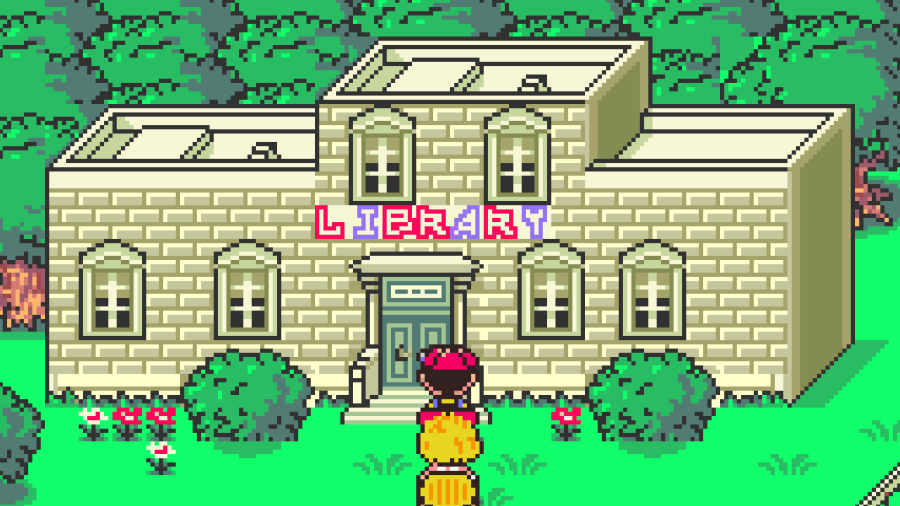
Past the teachers’ room, a courtyard, with the arches and cloisters of beautiful places, and balconies on the second floor; more flowers and trees, birds, a class or two engaged. The wings will be arranged like this: on the first floor, the ninth grade will be on the left and the twelfth grade on the right; the commons up front and the dining room and kitchen along the back; on the second floor, tenth grade on the left and eleventh on the right, with the library up front and an auditorium in the back.

The classrooms will be spacious, including various musical instruments and art supplies and incorporating their instruction into the day. There’s no need for a desktop computer in the whole place, though printers would be there to have hard copies of certain things, and projectors, if funds allow, laptops and wireless internet. Books of all kinds, pens and lined paper, chalkboards—not whiteboards, or else the slidey kind that doubles—yes. One old TV to wheel around, for nostalgia, and all the utilities and storage in a basement—maybe a swimming pool down there, too, and a chemistry lab. Student work everywhere—of good quality, to inspire study and a little competition—awards and honors belonging to the school and its esteemed faculty or donated by alumni, photos of us on field trips and sabbaticals, baby pictures, family pictures, rock stars.

Rain or shine, games are outside on the field and courts, in the schoolyard doubling as a neighborhood park. If the weather’s really so bad, we’ll stay in all day, playing chess and dominos, older pastimes, or the odd videogame smuggled in. I don’t think there needs to be a gym. But on the roof there should be another garden, quieter, and a little patio, a railing all around; a telescope, more bookshelves. This is where the counselor will often bring kids struggling with something to talk; and for elegant meetings with donors and alumni, what have you. The end beyond end of the school, and another metaphor and dream of mine—flight. Then back out in the park for barbeques and field days, birthday parties, holidays. A big public fair once a year to benefit community service and showcase the community. Kids living in the surrounding houses will attend the school, but without it being too insular—exchange programs and service days, visiting teachers and community members. And this is just a model, but one whose heart should be translatable in many places.

Thursday, July 30, 2009

kaleidoscope museum--a curriculum of perspectives

This should be held until eighth or ninth grade—so shall we keep the division in grades, and between elementary, middle, high and college, as they are? And what about the lay of the school year—where should the breaks be, and how long? I suppose much will be conserved here; but let this be considered hand in hand with the curriculum. The keystone of it, as I conceive it setting out, is its historical perspective, by which I simply mean that, insofar as possible, works will be taught in the context of their creation, and in relation to what came before and what followed. Thus, we will read the likes of Beowulf and Chaucer, Shakespeare and Milton, Blake and Keats, Joyce and Eliot, Tom Stoppard and Philip Pullman, in that order, though perhaps cyclically, by which I mean that while kindergardeners probably will not get King Lear, they may be treated to a few of the songs; as soon as possible, though, the groundwork of an understanding of Renaissance, 17th century, 18th c., and modern will be laid, and the key ideas of each borne in mind.

As with the English, we will read some French, Italian, German and Russian works to provide another kind of context, geographical, and build outwards in both, in time and space, so that a graduate has a sense of the sweep of culture to which he is the inheritor. And we will read American books, of course, and books by women, and from elsewhere on Earth than the West, from other levels of society than the elite, and even some postmodern and contemporary stuff--this is all our purview. Naturally, we won’t be learning French, Italian, etc ; however, exposure to foreign languages, and actually becoming fluent in at least one living language, is a major goal for the new education, a concrete end within the broader goal of relating the possibilities, the varieties of experience making up life. Towards this end, students at one elementary school will begin learning Spanish, those at another, French, and at a third, Chinese; in the unlikely event that there are qualified teachers, more than one may be offered at a single school, and any kids whose parents want to go a little crazy will be free to take multiple languages.

This freedom raises an important point—while there will be a core of such sources as the Bible, Homer, Shakespeare, elsewhere there will be instead a list to choose from, at the individual teacher’s discretion, to avoid undue lockstep and keep things fresh from year to year.

And then besides books, for there is much more to culture, we will teach the art, music, history, that is, what was happening politically, what life was like, and science, how people looked at the world and made use of it. It may be worth reading some of the sources on these subjects, but more often it may be best left to the artifacts—the pictures, reproductions of tools, food, maps—accompanied by a summary from the teacher. We will not only be listening to music and looking at paintings, but playing instruments and singing and drawing—and even writing, not just reading. Oh yeah, math.

Monday, July 27, 2009

teachers, books, faith--Montaigne

Naturally teachers will be expected to have at least an acquaintance with all the works they teach, hopefully a thorough understanding and interest moreover, but at least an open and fertile mind if coming to it, like their students, for the first time. It is the person that is essential, though, not the books they know, when we are discussing the kind of teacher I want, and want to be. Let us make that clear: despite the importance of books to the new schooling, we are concerned with developing good people, not literary critics only, and so the role models, the teachers, must foremost be interesting people themselves. It is just that books are an invaluable repository of the eternal part of just such interesting people who have lived throughout history—proving it is possible and giving us good cheer. God rest ye merry gentlemen; we must read some of the Bible, old and new, in various translations. To show the variety in translation, the vicissitudes in the history of its composition, the interpretations, allusions, and prevarications erected upon it, never forgetting the faith attached to it, sometimes how fast, others how tenuously, but not, of course, expounding or declaiming this faith unfairly, but exploring it, too, and showing the margin beyond which only belief permits certainty, and the lack of belief, if it tries to force itself, certain danger —our watchwords are Montaigne’s: What do I know? and, not necessarily an answer, Restraint.

Friday, July 24, 2009

welcome

Que scais-je?
Love thy neighbor
γνθι σαυτόν

--and an American flag as you walk in, a globe, and a bookshelf. Off to one side a coffee table and comfortable chairs and benches, windows, plants, paintings. Magazines and local brochures, picture books scattered about. A dog ambles by, old and good-natured.

More and more the school and the neighborhood take on the same images, the same idea. What motivates one motivates the other—authenticity; responsibility and delight; honesty and respect. The same human weakness afflicts them both in this least human age, at the ebb of our capacities in that regard--we don't know the people around us, don't care about what is not immediately relevant to our narrow sights--put up with bad and evil things silently, hoping to escape, and are bad and evil ourselves if it serves our ends.

The freedom, the flexibility which permits this, in itself good, has not been consolidated with the guidance to make good decisions, now that every choice is open to us--to make us aware of the all laid out before us--to so much as instill in us our value-giving, meaningful aptitude, the apple of enlightenment.


The neighborhood is the metaphor for the school, so that all the teachers and students will strive together and be at home, and the school is the way towards making the neighborhood real, so that when they leave these walls, they bear it out in daily life, daily bread. Say, how are you? and hear the answer--hear in the answer acknowledgment of mutual humanity. Say, when they are unsure of something, I don't know, and go about finding out. And when in pain or threat of violence or fear or rage, hopefully, to catch sight of themselves and laugh, daydream. Have the confidence to pursue happiness. That is all.