Saturday, October 1, 2016

Semifesto borrowings and a bulleted to-do list

The first real poem we look at in Old English in Signum’s course is Caedmon’s hymn, about which miraculous stories are told. The shepherd goes out of dinner before his turn to sing on the harp, falls asleep in the manger, and an angel bids him sing in his dream. He doesn’t know how, and yet in his dreams when he is told he must, he does, beginning with that: Now we must praise… Upon waking he goes back to shepherding, but now singing perfect songs of inspired beauty, and it comes to the abbess’ attention. They think he lived only just before the time of Bede, in whose history of the church in England the story is told in Latin, and many of the copies of that work a little later include glosses that render the first recorded song back into Old English, in this or that dialect or accent. So it is a poem and a song, on thresholds of orality and literacy, English and Latin, miracle and institution. And all of this is inherent to the work, because it is all of the ways it is recorded, preserved; it is insofar as it is talked about within a much larger history--the institution recreates, reinterprets again and again the poem of the miracle, and what the shepherd is talking about is the Christian God worshipped in the double abbey by men and women who, as he serves them with agricultural and pastoral labor, serve him spiritually, by their words and their silence.

As many iterations as there are of this first Old English hymn, no other songs of Caedmon come down to us with any certainty as to his authorship, or rather mediation. The mediterranean God is referenced with cumulative germanic descriptions, repeated and varied in the recognizable style and meter of the north. Whether the angel, too, was of local extraction, or the latent talent of the singer was molded by his listening at all the previous dinners, what came out when he was made an instrument, preserved orally and then copied down by scribes when Bede’s anecdote gave them occasion, was this compound of art and learning where neither had been before, in a language hitherto unwritten, even though poems, the scholars conjecture, had long been sung.

Little sparks and bright coals in that ash heap of world history Robinson’s John Ames returns to at the end of his long letter to his son, stories like these might be adduced as evidence, by somewhat circular reasoning, for the truth of the Christian epistemology, that knowledge and love are inseparable, leading to right and good life in this world and eternally. That is a paradox, but at this stage of the inquiry the activity of love is particularly enjoined by a certain branch of theological adherents--rather than a liability sinking the thesis, the paradoxical claim that  truth, love, and right action form a kind of trinity akin to the nature of the God in whose image human nature is made, is taken to be the strongest attestation of its essentially being the case, that is, that there should be such a unity not just in our confused concepts, emotions, and doings, but in our very being, and down to the ground of being itself. Theology, metaphysics, ethics, epistemology, all branches of the love of wisdom are subsumed under the richer meaning given to each by their interconnectedness: love in wisdom, wisdom in love--and the imperative that this be an understanding not of the head or even heart, but of the whole body, also. To make it a systematic program is probably no one’s intention who ever arrived at such a thesis--Robinson and Wright are the two that come to mind in contemporary letters, Kierkegaard and Nietzsche the earlier and wilder diagnosers of the out-of-kilter excesses of Enlightenment and Romanticism--but because the emphasis tends to be on rekindling or recognizing the role of love in true understanding--reasserting the importance of the heart, Romanticism’s revolt against the head, or Barzun’s cultural vindication against narrow scientism--it might be worth considering the importance of having something significant to hold up to love in the first place--and this is part of what makes Great Hearts’ or St Johns’ curriculum so attractive, the rigor of the content and high standards for its theoretical understanding, alongside and hand in hand with the community thus drawn together around it--and, to keep track of the third element you might otherwise want to separate off, or lose sight of and reason two-dimensionally, perceiving a dichotomy where there must be a moving dialectic, remember the crucial step to be taken beyond the walls of the study or even the school, the reduplication of thinking and feeling in everyday interactions, the healthy outward play of the tremendous inner energies unleashed by the conscience and the will reestablished in creative, not mutually annihilating, tension, flowing outward into music and gymnastics, tragic and comic, apollonian and dionysian revels, service pastoral-agricultural and pastoral-spiritual, poems epic and lyric, memorized and inspired.

Something along these lines is Tolkien’s goal in the essay On Fairy Stories, a real joy revealed in the turn around which the whole story determines itself. The truth of the happy ending is for him analogous to the intuition of the truth of the impossible miracle of Christ, and points back to it; the fact that we access this primary truth by means of the Bible story is for him a cosmically apt irony.

But what then is the status of Pullman’s fantasy, which inverts the loop, takes the sadness of realizing the Christian story is impossible for him, for Mary Malone, or simply inconsequential, for Will and Lyra, beside their own innocence and experience, their relationship, death and resurrection, in a word, their story, and casts it explicitly in the fantasy form derived from these apologetic Oxford dons? Or what happens when each of them gets reappropriated--perhaps this is the question more to the point--and His Dark Materials is put onstage, the Lord of the Rings, etc, onscreen? When they shortly become commodities, if not institutions in their own right, and their economic value supersedes, for most purposes, for most people, the meaning or value of reading them? Even asking this on the heels of our first, roughly formed question, takes us too far afield, but here, at least, you might expect the contemporary and the historical Oxford men of letters to have some common ground, for they surely do value reading and stories over commercialized adaptations or they would have been businessmen rather than storytellers, but then again, Pullman is frankly unapologetic about his stake in the profits his work earns him, and his interest in protecting intellectual rights and arts education. And how many more people have come to read the original books by way of the secondarily secondary fantasies? If this direction of the reading process matters, it would be a very small leap to the perhaps surprising common ground they also share, a respect for and desire that people go all the way back to reading the Bible and classical or pre-classical myths.

In his interviews and lectures, Pullman certainly comes across as dour, heavy-handed with religion, bleak on politics, but his intelligence is too keen, his stirring up of controversy too artful and successful, to mistake this for a more critical neglect of joy. To come back to the end of His Dark Materials, it has to be noted that the love the characters share is preserved, their promise is kept, though it means forever closing the doors between pre-existing worlds and false heavens. The eucatastrophic turn, if you like, comes right in the final lines, spoken by Lyra: to build the Republic of Heaven. So whenever Pullman gets to talk about books he loves, or address the questions of children in his audience, or the work of politics, or the beauties of Biblical verse and the art, as opposed to institutions, it has inspired, he lights right up. The gleam comes through the facade or reality of a crotchety controversialist.

Now, if Olsen can create and manage an online university out of his love of Tolkien, and find people not only to work there but to pay for and take the courses, it should be just possible to start at the beginning again, studying what instills that joy, even if the ideological line of descent is more complicated, even if that joy is more hidden, perhaps most of all from itself, spoken of in another way or not professed, yet deeply believed in all the same. There should be some room for courses on Pullman, Blake, and Milton, and reading the Bible by their wonderfully kaleidoscopic light, as well as the demure radiance of the Inklings; these courses, in turn, can begin as notes and responses like these, but then take shape in more formal lectures and seminars, audio recordings for podcasts and online discussion groups to challenge and refine all these wayward ideas. Soon I’ll need a better microphone and the long-deferred contraption to capture pictures in a notebook or on a chalkboard, because the handwritten and hand-drawn has an important place in the midst of all these new media, just as the human voice, the reflective conversation, surely do.

Arrange before you, then, the manifold projects, each one as it were represented by a book on your overfilling desk, so that none might be lost, even if none is ever quite completed to your lasting satisfaction. Here is a beginning--
  • The neighborhood--Tolkien even stresses that Faerie is a place--and this is a word doc somewhere

  • Publishing the pieces already written, as they stand or with editors’ suggestions, but anyhow starting to submit them
  • Translations: Figari and Philip Pullman’s lesser-known writing--he even gave you permission once before, as the museo did, more or less
  • The crafting of short stories and imitations workshop, clearly becoming indispensable as your rambling runs amok
  • The school, in its iterations, including a letter to Denny
  • Reading the rest of Robinson and Pratchett, but also running seminars and a Big Read? -
  • Letters to Elliot and experimental theology again
  • Writing, by hook or by crook, three pages a day
  • Memorizing poems and songs, as well as writing them
  • Postcards and other letters, too
  • Daily devotions, Bible readings, and some prayers--Calvin, Edwards, Barth, Kierkegaard
  • This after school club, reading and writing volunteering
  • Work in prisons, part time or voluntary
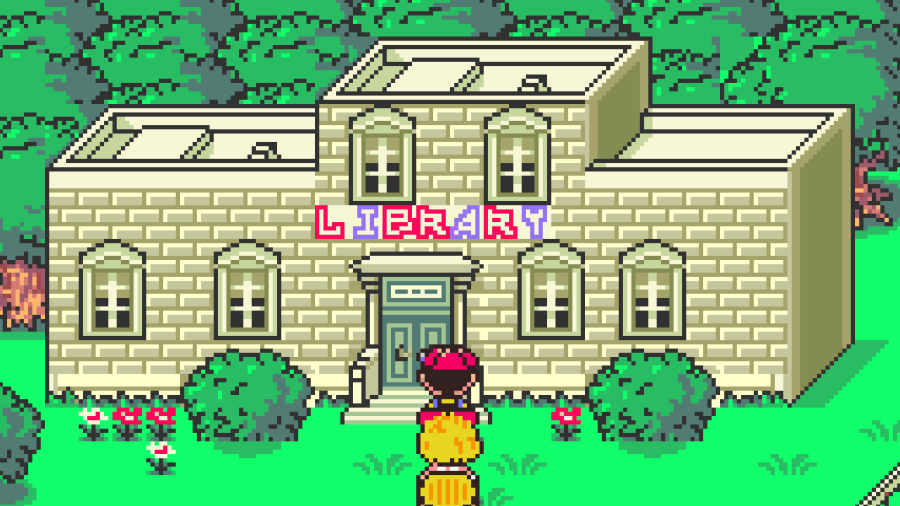
  • Video games are another big one, all that writing on Earthbound
  • And on soccer--playing, not to be forgotten, regularly
  • Building the contraption
  • Parents’ stories, dad’s, his mom’s writing, mom’s notebooks and grandpa’s
  • And of course what to do with/about money--fund scholarships?

Wednesday, May 18, 2016

de cuyo nombre no quiero acordarme: Sir Terry

Humor brings together and sets them apart.

It works best when it is fresh, original, and also as old saws, attic salt.

According to its reach you can define a people.

By its subject matter, you can know their concerns, and what is sacred by what is left out.

If nothing seems to be left out, it would seem that nothing is taken too seriously--that is, nihilism tempts.

Fortunately, though, there are plenty of things we don't joke about simply because we don't know about them. It could be the other way around, too, that we do joke about what we take seriously, and that humor is then part of our enjoyment of that thing's value.

Humor is the most natural of a language's features, and also the last one learned.

The smile, the chuckle, the wince, the roar.

--Humor creates a world.

In Terry Pratchett, literally so. The kind of world it s is makes it so nice to spend time there. This is particularly instructive for teachers who might wonder how to get their students to read books--these books teach and delight in the reading of human nature, morality, economics, language. They present categories of judgment distilled from a long and interesting life. They provide a locus for nostalgia in hindsight and mystery in the moment. They ask questions of readers as they portray possible lives.

His first impressions of The Wind in the Willows: "The moles and badgers go into each others' houses! They had hats! I thought: This is lies."

So is it the case that I want to teach these books, or is it that i want to read them? There is Signum University, presided over by the Tolkien Professor, offering work study but I suspect not a whole lot of it. He raised funds and ran across the Lord of the Rings online world as a chicken to celebrate. They'er selling T-shirts now to commemorate it. No telling where this project will end, but along the way it's evidently a little more fun than college teaching. Which is too bad, when you think about it : what is lost when you make the concession to the screen, no longer gathering the people who want to learn something in physical proximity around a green? Thinking about it means aching.

That's the name of the heroine Pratchett settled on for his last book, the story within the series that seemed to be his real legacy. Still left to read, and to be read as a whole within a larger whole--hence the ache, and without dismissing it, the laughter. For no apparent reason, his other late scoundrel-hero, Moist von Lipwig, dances atop the moving train, and Vimes, his salt of the earth and judge of the doomsday, interprets it in the light of his own dark mark, clearly a response to the facile heroes and villains of Harry Potter. In the progression of Vetinari, on the other side of the political coin, from assassin-tyrant to shovel-wielder, the same moral richness, dionysian-apollonian tragicomic outlook is developed. And Sir Terry's own struggles with Alzheimer's in the disappearance of the golden boy Carrot, heir to the throne, and the increasing difficulty Vetinari has with the crossword, and the ever-present yet lightly handled personification of Death. So we are setting places and personifying ourselves, and to dust we return.

What exactly Sir Terry endowed wth the large scholarship in South Australia is not clear to me, but if it is something to do with writing and satire rather than Alzheimer's research, that would be a powerful statement indeed! Money is a certain kind of promise, but no substitute for keeping it. Keeping the promise is the action, the creation of which the word, even if spoken in the language of money, is the symbol, reminder, inspiration, meaning. Suffering is when it is broken, not yet carried out; joy is its fulfillment, and laughter represents a certain attitude towards the prospect. Another kind of reminder, to take the words, the promises seriously, and to appreciate the fulfillment where we find it. So, Pratchett and Pullman over against Rowling (really Tolkien) and Lewis--that seems interesting! I'm reminded of the time I got an email back from Pullman's website about translating some of his speech into Spanish for the humanists--that must have been a good while ago now. And a decade at least he's been working on the book of dust, speaking at a few engagements and writing things on twitter, and not publishing his essays and articles on stories and education.

There's this other kind of writing that has taken hold of publishing since then, represented by John Green, who tapped into the base of readers of other series and gave them some real-life-seeming stories to read under the covers, in the cafeteria, in the glow of computer screens playing vlogbrothers and nerdfighters, coining words, suggesting avenues of activism-consumerism, and he got his start from reviewing such books for the publishers and libraries.

What is a library, though? It's very strange--don't people go there so they don't have to buy books? Or mostly to use the internet or get off the streets? To have a place to contain all these stories and worlds, and to convey them, at once the enticement and satisfaction of a desire to learn? To make desire safe, to ground the most radical ideas, to spend money and freely share what is bought with it, but during such limited hours, and in enforced quiet? So the garden of babel, and the library of eden.

From Heidegger and seminars at the George's new house behind downtown: Nothingness and Eternity. A creeping doubt that this represents a bridge to the kind of writing that no one outside (or perhaps within) philosophy departments reads, and that that is not different in kind than the great books--that this despair of deriving meaning or experiencing serious interest in what is called great is just what students feel encountering Homer, Shakespeare, the Bible, and certainly the modernists who led up to it. Hoping there is clearing, still, and a kind of joke.

Hamilton review, and a preview of something else

Finally listening to Hamilton proved inauspicious: the bird signs were two fallen out of the nest. One stuck in the straw still hanging from the pipes by a foot, the other, almost fully formed, had landed on the pavement, still moving slightly, breathing and looking around, but unable to stand on large spindly feet. It stretched out and died within an hour of when I found it. I didn't know what to do when I realized it was alive, and I don't know what I'll do with it now, either. The ones that fell from the other net after the wind and in the water bucket by the window were both dead when we found them and are buried in shallow graves by the bougainvillea corner, marked and covered by bricks. Mindful of what happened to the chicken chicks, I didn't try to give this one water (they drowned overnight, the kids said) but that was the only thing I even thought to try to do. I tore up paper and shifted the live one onto a new nest before shaking the other one down with a broom, not touching either. I might not eat much meat for awhile--or much of anything, really. There was a cockroach stuck in my water bottle, so even drinking is a little nauseating now, but a can of beer seemed safe, so I'll likely have another soon.

The musical reminds me of Corbyn's play about Lincoln, written in iambic pentameter a decade or so ago when he was living in New York, waiting tables. How many iambs went into Hamilton, I lost count, but it has a classically sure hand behind it; it's cool that the writer also plays the lead. His eyes, in the video of the opening number, blaze all around, as if blinded by the lights into wide circumspection. Interesting, too, that all the parts are historical figures, white, played by contemporary artists, non-white. The message there is clear enough: white people are history, and not even fit to tell it. It is exactly the liberation so devoutly desired by Joyce--the escape from history's nightmare--and exactly the premise upon which we read the great books ahistorically. Most importantly, in the space created by the music and dance, even the pallor of the intellectual lead is jarring--it is a stage and a songbook made for non-white interpreters only. Miranda, mirando, would be appalled to see a white actor gesticulate, a white body in motion. The accents of whiteness are reserved for the register of imitation in Jefferson and black comic relief in King George, safe butts of the joke, whose humor is all very large-hearted, whose message is ultimately that of every great story, human, and not narrow.

It seems inevitable that everyone should love it, and that even now the imitators are at work to duplicate it--a sequel about Burr, side-lights on the whiskey rebellion, Civil War musicals, all seem obvious and especially so when the demand is stratospheric. Audiences who can afford the tickets, of course, are probably not going to be qualified to create anything comparable--the only group more resented for all pop-cultural purposes than white people is the rich--but this music has already penetrated all through the internet, top to bottom, and across the skin-color spectrum. So even now, industrious spoken word poets are no doubt raiding the shelves of local and college libraries, checking out the juicy biographies of American yore, oppressors and heroes, and sharpening their quills, sampling their tracks.

I told Brian the other day I wanted to make some art with him--what could be more timely than opera, a Gesamtkunstwerk, to ride the zeitgeist? Adaptations of Sufjan's Age of Adz or the Residents for live theater, or, less potentially litigious?, a Narrative of the Life staging--it's Harriet Tubman replacing Jackson on the $20, so maybe this is the time period to focus on--or something to do with the Federalist Papers or de Tocqueville? At any rate, it should be based purely on the great works themselves, that is, ahistorical, with imaginations and anachronisms filling in the rest. Making the Constitution the main character, and arranging the play accordingly--in any case, a kind of dialogue, a dramatization of dissenting voices nevertheless aiming to accomplish something real, thus capable of seeking compromise. On the other extreme as texts go, something like the musical Brothers Karamazov, so massive and complicated that putting it onstage would necessarily simplify, schematize, yet we could preserve the essential contradictions of the universal story--and what music it would be! Smerdyakov on his guitar in the backyard by the gazebo--what an image to put a play around!

If its power to inspire is any measure of a work's worth, Hamilton is likely to be a masterpiece. A drop in the bucket, beside all the pecunious praise heaped upon it, but baseness oblige.

Tuesday, March 29, 2016

Response to Nietzsche seminar

The Genealogy of Morals being etymological vs. the light cast by etymology for genealogy?

(That was the extent of my notes during the seminar)

The allusion to Descartes in the appeal to collaboration with physiologists, to Rousseau in the plea for an essay prize on the question--which Lea maintains she is not exactly asking, but rather is asking from another perspective. The loneliness of these writers, their solitude and silence, is an element of the way they are unknown to themselves and a method, too of how they (we) seek to get to know themselves. In Plato it is in dialogue, in schools now Socratic method is all the rage, in Kierkegaard the interplay of pseudonyms, and in seminar actual conversation, of a certain kind, the course of which is difficult to track while simultaneously participating in it genuinely, or even to recall with much clarity afterwards. The other extreme of the standardized tests, or a virtuous mean between them and some completely deluded unschooling, rather, a mean which to begin to talk about and analyze will require another shot at Aristotelian, or perhaps Nicomachean, method, the former adjective having been long since discredited by its Scholastic association. Plenty of people are bound to be studying Neo-Thomism nowadays, even so.

Though if I recall my question about the Genealogy Preface and First Essay, I wanted to know, How charitably or how vengefully, ruthlessly, would Nietzsche prefer to be read? With what latitude of interpretation? He seems to be pushing polemical ends and wounding himself on them, to his sadistic anguish and ecstasy, when they turn back on him, inviting like means of reading him--brute force reads, blunt reads: he's a blond beast wannabe; he's martyring himself; he's promoting the Holocaust; he's a Jew, by his own characterization, and to borrow his own borrowed French, par excellence! And an exclamation for good measure. He wants to be beyond evil, but not bad, and beyond good--beyond nouns, or at least personified subjects, projected soul-substances, and perhaps beyond language itself, at least, language that anyone else can understand without 80 pages of exegetical ingenuity per period. Yet intuitively, perhaps, not so difficult to know or understand.

Like Rousseau, or Heracleitus, by one read he undermines his own logic even as he poetically puts forth his arguments that, in some more poetic sense, compel attention, spark inspiration, implore devotion, and raise laughter, sardonic and cheerful, intentional and--who knows, maybe all of it is intentionally funny, by a certain read. But he wants it both ways: it will also deeply wound, if you've read it properly, he tells you in the Preface. If this is to be taken on its face, it's preposterous. By Pullman's eminently British common sense, reading is democratic, and as tyrannical as a writer might be in his study, he has no place telling readers how to read him, or what he means by this or that, or why he matters, or what he's worth--in any other way than in the form of the writing itself.

The writing, its style, its focus, its craft, is great insofar as it does teach without meaning to, without trying--genius, Federer or Homer, is making it look easy, natural--sprezzatura, artful mastery concealing art. Shakespeare, Chekhov, Chaucer--at least they know when they're joking, we want to say, and that it's serious play. The way to learn to write, then, is by reading great writers and consciously, artfully, borrowing, imitating, engaging with them in dialogue, showing the wounded soul you believe to be unique even as you know it is universally shared, even as you doubt it exists. Writing to and with that drive that is never exhaustively named, or you wouldn't write anymore at all, and then invoking the muse even in your silence, listening for a response--that zen abyss of hanging on for the mot just, that echo down the way of the next sentence's rhythm, the outline of the next phrase, the sound of the pen scratching across the paper just softer than hearing, but felt as a texture, a gentle pressure. Of course we are known to ourselves, at least this much.

Sunday, March 27, 2016

Woofer

So maybe it's time to reawaken, renaissant, and respond. Thinking about what Cornel West's version of Great Hearts would look like, and if it isn't probably already out there somewhere, and what he'd think of Chandler Prep and the seniors' Straight Outta shirts. How to reform the school's curriculum to make it inclusive, without sacrificing the bulwarks of a tradition it's so painstakingly attempting to restore. Is it a wall against the barbarians among us they're building here, or a peristyle, a colonnaded courtyard for gymnastics and poetry to flourish?

My doubts on this score are sufficient as well as necessary for making my imminent departure willed entirely, though the community likewise taking root around this school's dubious mission is one I'm still conflicted about leaving for the greener pastures of the Northwest. Geography and theory, place and pilgrimage are still much on my mind these days, with our DC trip fairly fresh and the Innocents Abroad Michael lent me, along with the Canterbury Tales still echoing from our seminars, and Rios' poems and short stories about this place from the Piper Conference and workshops, and Robinson's essays and West's work from the Northwest and East, respectively, haunting me, contemporaries I'm only just discovering--that is, bothering to read, or listen to. With all this, finding I have things to say and no one to say them to--making conversation on the senior trip proved impossible for a myriad of reasons--I'm wondering again about posting twitters and youtubes, getting started in earnest on my book about schools and teaching, returning to my novella from this fall, and most of all sitting in my lawn chair while it's not yet too hot, reading: my favorite conversation of all.

It would be a shame to actually write anything on twitter, after successfully using it to be silently present in that virtual world for all these years, but perhaps it is time to start speaking and listening with those media--posting videos of chalkboard stories and audio of reading aloud, to go with those few recordings of interviews and urban tribes from Uruguay and the neighborhood which feel so long ago. To stir up attention to things worth attending to, if everyone really seems to be on their phones and devices constantly, to remind them there are things out there truly worthy of looking at that much, of listening to that closely, even maybe worth setting the device down for thinking awhile.

Thought has been an interlude in human development. Thought has been--already merging into technology from the moment we accompanied it with media. Our immedia, ourselves, are already becoming an afterthought--our focus is continually diverted.

Socrates knew this long ago as he walked with Phaedrus outside the city walls, and he went so far as to write nothing, only speaking and questioning, listening to others and to that voice within--recollecting, contemplating. Like Jesus, he wrote in the dust on the ground, kneeling with Meno's slave--did West call him Meno?--and that story from John's Gospel was the subject of the priest's homily on Sunday, overheard as we walked through the aisle of the Shrine of the National Basilica, with Christ Pantocrator gazing down. I'm concerned still and again with instilling reverence, respect, virtue through Socratic questioning and Christian faith--the immediacy of the paradox--after time spent in the Holocaust Museum, in the presence of its eternal flame and those of Kennedy's grave and Gettysburg's battlefield, and at the Kennedy Center, where the Montreal Symphony performed for us their world-class interpretations of Debussy, Prokofiev, and Stravinsky--yet at the time when it debuted, the latter caused a riot in Paris! and in our time, we patiently sit through it, only to be back on our phones, heading to the bar or restaurant for pie and finding nothing to say about the concert, the museum, the monuments! Is it that in the presence of what we know we must reverence, we are cowed? Is it that I am now becoming such a respectable figure that people are awkward in my presence? Students and other chaperons alike take on a certain stilted way of speaking to me, maybe trying to flatter me, as if I mattered, and I have a hard time speaking to them quite naturally, as if I knew what that meant.

I try to recall, on the plane looking out the window, say, the way I know it used to feel to travel, to fly, to encounter people and have conversations and see neighborhoods and visions, but though something of all that remains, I find that so much has changed.

Though there is less of the dream, maybe there is more of the urgency, and though words come readily to try to point at the images and sensations life used to evoke, even more readily comes the certainty that sharing and inspiring those experiences is more important than trying to recapture or rejuvenate their like in myself. I grow old, I grow old, I shall wear the bottoms of my trousers rolled, and yet Eliot wrote that at about my age--and he's taught these days alongside the geniuses he aspired to, Dante and Virgil, as well as the poets who live today, Rankine and Rios, only not at Chandler Prep. I'd rather not grow old here, though admiring and hoping to keep in touch with those who do.

The doubt that assails me is how I can do more, how I could have done more here. Writing up reviews of the plays at the Mesa Arts Center, like Wittenberg; getting involved sooner and more deeply with the writing program at ASU; volunteering with literacy and especially translation with the people around here, in plain view--only hardly at Chandler Prep; making more of a commitment to the writing Joe was trying to get done and made available through his organizational efforts, colliding against the dearth of leadership among his cadre of writers and artistic temperaments. But the poets are the legislators of the world, and there are poets out there, crucially significant voices, all but unheard. Surely by now those I had the great good fortune of listening to that day in Boston have gone on to study with some excellent teachers, or have had their talents squandered some other way--what opportunities like the poets in schools program mentioned by Rios still exist anymore? What jobs other than waiting tables or applying to MFAs and post-docs exist for those apolitical statesmen and women of the pen? And would one more purveyor of 140 character haiku and uplifting short videos of animals cute and culture beautiful make an impact there? The pets are the legislators of that world!

There's a bird's nest of grass up in the corner of the eaves, a little bird goes into it and sings from it from time to time. Would people be interested in hearing it?

What other prophetic voices such as those many mentioned by West are out there, and what place should they have in a liberal arts education? or in the media consumption of the masses, for that matter? How is it that so many people read the Bible and so few read these prophets of our time? or listen to the music of Sufjan?

What did it mean when the rockstars of Metric were introduced by Joywave's lead singer acknowledging their own mediocrity and punctuated by a chorus of fans who sang accompanied by acoustic guitars? If mediocrity can and must be more popular in the moment than brilliance, can't there at least be more of this tragicomic humility about it? We love not what is high, but what moves us--and there is a virtue, nobility, greatness in everything, once we look at it. This is democracy's lesson, Dickens', Lincoln's, Wilder's, and Great Hearts would do well to hearken to the Hearts, not just fixate on the Great, if it really cares about making liberal arts the inheritance of a democracy, not an oligarchical element within it. And if fatigue played a role in our flagging conversations, if stress sealed our lips and wrapped gauze over our senses, inner and outer, then true leisure--schola--is in order in the curriculum somewhere. This quarter we have time to read something current, and still do justice to The Brothers Karamazov, surely.

Someone could lead tours of such pilgrimages as Chaucer's to Canterbury, Great Hearts' to DC, figuratively as well as literally, that were conducive to this wise rest. But in the midst of everything we do from here on out, there is that urgency to serve, to share, to translate, to converse, and perhaps convert. A certain amount of controversy seems demanded: any article out there about Khan's Servants of God other than the one on the Plough site? Any recent work in preparation for the opening of the African American Museum in DC? I know my timeliness with such contributions is miserable--Ireland, China, Brazil languish for me to say something about them--and soon, now, Cuba! Holding their breath! Based on the students' research in their projects recently, the quality of offerings out there for national and cultural history is really execrable. Work in libraries, perhaps? And articles about Obama's legacy consisting chiefly in the fact that he lived, that he was elected, governed, and was not assassinated--the President who Lived! In the way that he has presided over the rise of demagogues and popular movements both--this dialectic can't have gone unnoticed. And these fields opened up by West--prophetic leadership, jazz and blues as metaphors, and deep democracy rooted in Socrates and the Bible underlying it--who is working in them today? What cultivation methods do they delve in, what fruits have they borne? If schools don't yet exist with them as a model, how could they be founded? Could it be through collaboration and good intentions, as Ed Denny dreamed, or must it always go through some established community, as Great Hearts has managed to establish itself, at least rhetorically, on the Catholic scaffolding of Tempe, and situate itself for rapid expansion, rather than staying small, autonomous as he had hoped. Is this a conversation worth having, worth recording with him, to include the history portion of this book or series? Sketches of people, while it's fresh!

Sunday, October 28, 2012

More: nymphs and satyrs

Then she also mentioned the other gorgeous language teacher, saying she and I should talk, as she's also a big traveler, trying to go to Australia or somewhere like that, and has been everywhere else. So I'll have to talk to her. But what about all these people who never travel anywhere at all? Inviting Ms Speed to visit the campus, especially the art gallery where they have a good exhibit of Lois Maillou Jones right now; but when she does won't she also see how few of her kids will ever get to experience this mind-expanding education she respects so much? and I wonder if that won't be even worse to see than the other side of it you're confronted with in the dining hall and all the custodians--race, class, and all this: mind, dream, which is bereft and curtailed by those strictures and divisions.

And as I write this listening for a change to music at the same time, present neither here nor in the kitchen or the quiet lobby of the auditorium with those black men and women, not in the school with the black boys and girls, but far away in Brazil or the Caribbean Sea swaying to the Starman song off the Life Aquatic by Seu Jorge, appropriating along with the producers his talent and soul for the benefit of my own--but not actually going anywhere. And this is the same as anyone might do--listen to a, read a, talk about a, dream about a--song, book, idea, place. I need to talk to the teacher; and I need to talk more to Ms Speed. There is that--to have access to each other, to really talk, read, listen, what have you.

And there was that time talking to the dude at the coffee shop about God, but so many other times he plays the buffoon. As we all do, in our own way. I think he does because he thinks we expect it--white people, students--and in fact part of what it was that started that conversation was his seeming sad and real for a change, and I asked him if he was feeling down, but he lit up, and said, no, just tired, but not down, because how good is God, or however he said it, this is where he ended up, the goodness of God and his happiness. But I did not relent so fast, but asked if he had always believed, and never sometimes doubted. But I think he said no, and meant it, though he must have answered more slowly. So the sadness or fatigue or whatever it was that made me try to sympathize and really understand him, at least briefly, was the same as a moment of stillness and reflection that reminded or woke him up to his faith, and placed it back into movement, but that in turn, once going, could not have led me to sympathize with him, unless I already knew the start of the motion--which now I feel like I see a little way into and do--or, on the other hand, if I were in a less pensive, more bright and rejoicing mood myself, kindled by his smiles and remarks, and it weren't the other way, too.

But none of this is so evident to me, as is a kind of pretend-jocularity affected by both him and the students in their interactions at the counter, which amounts really to a substitute and a barrier to this real thing, and I don't know how else to say it simply than that, going back to that old shorthand of 'artificial' and 'genuine,' 'superficial' and 'sincere,' 'external' and 'internal,' which seems in a way right, but so bound up with the most natural prejudice of them all, our being inside our individual souls looking out from that perspective onto everything else, and, sure, then we'll set ourselves off and mark ourselves out in every way we can. But as Chesterton is fond of saying, the label 'artificial' is only a misleading one, papering over all sorts of fully natural drives and insecurities, hiding them with something false but right in line with our lived situation, false from the standpoint of such moments when we do see through all this and stake out a value for such moments over all the rest, and for this way of seeing over what usually happens instead, and the nearest words at hand for that, then, are 'fake' and 'artificial.'

But this does point at a real difficulty, and a real danger. Lately I've been feeling both of them quite keenly. The difficulty comes down to just this, that even here, in the express pursuit of truth and the good life, and indeed it seems attracted by that same thing that attracted me, are still people so manifestly unfit for the open-hearted search, for asking questions and listening, but so content with shamming and hamming with our man in the coffee shop, or toadying up to any tutor they can get within range of.

Saturday, October 13, 2012

The sibyl of Annapolis Middle

Ms Speed is that, speedy, yet never in a rush. To sub for her this morning, then for some of the other teachers in and out, is to see the salient needs of the the school today. How the spanish teacher was already there downstairs in the auditorium helping with rehearsal for the Alice in Wonderland show, wearing the same orange t-shirt as all the kids performing. Then she came and told me all the parts of the class, but had nothing written down. Then getting the walkie talkie and hanging out a couple hours, first watching the open rehearsal, then in the principals' office overhearing snatches of their meetings and official radio correspondence.

  And this is when Ms Speed, there in the hall, was back, saying something about books and art and Christ, and was it Herman Hesse the person she was talking to had said? Then there she was, going on about ring things, for her 11th grade godson had is ceremony that morning--what it means that fewer people are getting them, and to turn it in or out, this way or that, 12 people together and the 13th the other way which locks it somehow--did she say that?--but everything she says or doesn't passes across her face like clouds flying, and scraps of windy day, her glance over here, over there, always vaguely upward, her hair and face shining, her eyes laughing, thinking.

As I was reading the Ethics, she shared what she was reading--the book on teaching with poverty in mind all the teachers have, her notes on epigenetics--what gets ingrained by generations of circumstances, what thus can indeed be changed the same way; and the importance of being there with a teacher dealing with some tough kid, so they know they're not going crazy, or something--not even doing anything sometimes, intervention with a time-out, but just being present in the room, supporting in that way. And her steps for the next few months, to know a couple things about each teacher and staff member in the building--with that she brought out her cards, which she's used with kids and grown-ups for years, and they looked it, like all the cards from Granny's board games, and I picked one on family, muttering something about marriage not applying to me yet. Tell about a happy family that you know, ok, the first thing that comes to mind: the family by the park, a big one, and all the kids like the parents going to St John's, how I first heard about this place, and why I'm here, and traveling maybe my dream, as she was talking about that.

Teaching being a calling for her, as at the church, where for some it might only be a job--still, she has one of those, too, at Pennie's, but she'll quit once her social security kicks in in this her 66th year, and have time for more, and more to give to church and school. What kind of thing is school, then, a job or a calling, a paycheck or a life? And the best teachers, are they the ambitious educated young, or the elders who know the realities of their students' lives, and bawling them out and kicking them out into the hall, or talking to them and giving them words of advice, shouting them into line or building them into all kinds of truth for which discipline is only a structure? Her gestures for talking about different possible lives she tries to inspire or connect to the kids with--the people who go to Hawaii because they love to surf, and every day after work they go surfing, or move to Utah to live, so they can ride mountain and dirt bikes (at first I thought her pose looked more like skiing, but then I saw it--her, they were all her, in a helmet and visor, zooming down the dirt hill and through the woods, and in a bathing suit surfing the clearest ocean wave).

What a wonderful woman, at least as cool as Mr Eppeldauer back home. And to talk about dreams in those terms, as they both do, at once realistic and deeply personally imagined, a kind of retirement active through as much of a lifetime as possible, and physical activities emblematic of properly soul-felt happinesses--this seems in line with the best American thinking, and as such is apt to capture the attention of young Americans across all bounds with sneaky philosophy--not detached from but fulfilling life.