Hooray once more for Spokane producing this year's Teacher of the Year, but say: Is there an award for worst teacher of the year, worst schedule, worst school? If there wasn't before, I might claim the inaugural recognition. Somewhere, a student goes from class to class with teacher after teacher nearly as bad as me (and maybe I'm one of them). And whatever the worst school is, I would guess it's a middle school (and maybe it's the one where I find myself).
How did things come to this pass? In a word: cupidity.
As the remarkably still-relevant local press has been reporting, the state of Washington recently coughed up millions of dollars for funding public education, which the state's teacher's union promptly pounced upon for teacher pay raises. All very well so far.
Then a couple of weeks ago the conscientious if somewhat haughty substitute teacher you see before you received a welcome email: the first opportunity of the year to work at the same placement for potentially weeks on end, for a teacher out with a broken bone.
Now, the calculation which entered into my mind was a far simpler one than that animating the teachers' union--if I work the same job 20 consecutive days, my pay roughly doubles. Middle school is not my favorite, and I knew this would be a particularly difficult school, but the decision was simple. Mercenary gain outweighed any other considerations.
For a week or so all went well enough. It was still early in the school year, and the students were not sure yet who I was. Despite being responsible for only three periods a day, I was there over half time and thus being paid a full day rate, until the 20-day policy should become retroactive and my cup start to runneth over. Then one morning I arrived to hear some troubling news: the time-sheets would be adjusted to show just .5 days, with the other .1 entered somewhere else as "supplemental pay." Thus, even once I got to the magical twentieth day, my hourly boost would only result in a slightly higher amount of money per day than if I had been working random jobs here and there, which would have been much less stressful.
The administrator in charge, the sub dispatcher, explained that this shift in policy had come about due to the teachers' raise. Suddenly, because as a long-term sub I would be paid according to experience and educational attainment an hourly salary, like any non-substitute teacher, my take-home pay would sharply decrease! I heard from the custodians that they--the district admin--were going to let go of veteran staff and not rehire, so as to prevent shortfalls in the future budget. But the immediate consequence of the squeeze on me was a wave of cynicism. The scales dropped from my eyes. Here is what I beheld:
The disastrous scene at the high school already mentioned, at which I was present only because I was now available to take half-day morning jobs so as to fill up my newly-jiggered time-sheet.
Then on my bike ride up to the middle school, I wondered how much of that money would go towards the union's continued lawsuits against charter schools in WA. How much to early-release days for collaboration time every other week. To walking the fine line between breaking students of their disrespect and bending to their sweetness--all the time spent on refocusing and behavior contracts and social faux pas rather than actual instruction or practice, a vanishingly small part of any class period. How this balance is reversed whenever students are allowed to play sports or games. How long it will be before flipping the school day means not just swapping in-class time from instruction, which can be delivered just as well via video, to practice and coaching, but until academics become the extracurricular and athletics the ostensible focus. Until public schools, like universities, openly devote their resources toward producing winning teams and top players, rather than to teaching. Following the market forces to their natural endpoint: to LeBron James funding schools, just as to Gates funding Khan Academy...
The raucous class in the Spanish room the period before I started drove me out from my borrowed desk to an empty chair down the hall of the third floor mezzanine. I sat there typing some of this on my phone as kids downstairs played with the elevator. Its door opened, no one going in or coming out, and closed again.
The mezzanine--love that word--wraps around the cavernous library, the one room in the school which is consistently quiet, mainly because it is generally empty. It takes up a huge amount of space and seems to pay two librarians full-time to preside over this vast emptiness. I figured out how to get my school laptop connected to the printer there, only to be passive-aggressively scolded by one of them for printing out copies of black-and-white images, causing the expensive toner to run low.
Those copies, then, mostly turn into cuttings and crumplings to be thrown gleefully around the room while the images are supposed to be getting pasted into the students' interactive notebooks, often as complex flipbooks and foldables designed to engage those kinesthetic and spatial learners who, as I've said, will be mostly throwing things at each other instead. It becomes a daily purgatory for the few students who do listen and take down the minimal notes of actual Spanish into their notebooks, and for me. Deeply humbling, to daily ask for attention to teach the words with which to understand the world anew, and be ignored, I tell you what.
Taking their four or five phrases and questions, all we had managed to copy down together, the class was supposed to put together a comic strip of a conversation in Spanish. Here I should have showed them, I realized while listening to Art Spiegelman deliver his talk at Gonzaga that night, a sample of a finished comic. Having deprived them of Peanuts, I'm just as hopeless as the English teacher who deprived her class of the Adoration of the Magi.
One great thing the author of Maus said: wasting time like he had to do before the internet, he used to look up words. He showed a definition of comics from an old illustrated dictionary. It mentioned story, so he had looked that up next. Apparently, the two meanings of story--the narrative and the architectural--are deeply related. The story in a building comes from the same word, historia, as the stories we tell, and in that case it refers to the comics in stone and stained glass which used to wreath the houses of worship...
The opulence of the Gonzaga campus, blocks away from the chaos of the middle school. Its hum and buzz of elegant industry, beside our cacophony and squalor. There are flyers posted around the middle school about Gonzaga students coming to play basketball certain days after school. I hope that makes some kid's day.
Then there was the time the door to the classroom opened and admitted a student who had never before come to class, though he was on the roster. I fell over myself to give him our cutable handout of the day.
Somewhere between the private college and the public school, between homeschooling and truancy, between bending and breaking, there has to be a better way.
Saturday, September 29, 2018

Wednesday, September 26, 2018
Overheard
"In the old days, people would be saving their pennies; these days--I was at the football game last week, and at the concessions stand you'd see people pay for something and then just throwing away change. And it's the same all around the halls, there's coins just lying there. People don’t think it’s worth their time to keep their change. It’s like, they don’t know what money is."
"What is money?"
"Money is money."
"I’m gonna be honest, I don’t know what Christmas is."
The same student had said this earlier, but was ignored in the free-for-all then. This time, when he repeated the evocative confession word for word, a few protested incredulously, but the teacher cut in again overtop of them, mistaking speaker for subject, summary for style, in a lesson on opening paragraphs of O. Henry’s 'Gift of the Magi' and Poe’s 'Cask of Amontillado.' In theory the lesson, read straight from the book, would have been covering style and symbol, incorporating earlier lessons on diction, syntax, imagery, and point of view. In practice it was a catastrophe, as you have it here.
"What is money?"
"Money is money."
"I’m gonna be honest, I don’t know what Christmas is."
The same student had said this earlier, but was ignored in the free-for-all then. This time, when he repeated the evocative confession word for word, a few protested incredulously, but the teacher cut in again overtop of them, mistaking speaker for subject, summary for style, in a lesson on opening paragraphs of O. Henry’s 'Gift of the Magi' and Poe’s 'Cask of Amontillado.' In theory the lesson, read straight from the book, would have been covering style and symbol, incorporating earlier lessons on diction, syntax, imagery, and point of view. In practice it was a catastrophe, as you have it here.
When I arrived before the bell, the teacher betrayed apathy toward my presence and disgust with the class, mustering the dregs of resentment against the para I was subbing for.
"I'm here for so-and-so," I said, "--or rather, she's in the BI room while covering for the teacher who's out today while I cover for her. So just let me know how I can help."
"Oh, she doesn't do anything, just sits there on her phone." It's what she had been doing when I talked to her in the BI room; I got the sense she was the softball coach, and might be doing something related to that important job.
I made a non-committal sound of commiseration, looking around the classroom, and repeated my intention to do something to help the teacher if she would only say what that might be.
"I don't even know which kids she's assigned to work with, since no one has bothered to tell me." An appealing glance to another para who had come in; they conferred briefly. "She mostly hangs out on that side of the room. If you see kids off-task or whatever...just stand over by them if you see they’re being a jerk."
Between the dull workbook and this husk of a teacher, the lesson was seemingly designed not only to be incomprehensible, but to drive anyone away from ever stepping into an English class or picking up a book again. The entry task invited students to write about a symbol in their culture and its importance. No guidance was given, aside from the example of the american flag.
The lesson proper began with a description of the two textbooks/workbooks and their provenance. Evidently the slim one they had been using was a pilot curriculum specially provided for this fortunate school, whereas they would now be using the thick normal one from here on out. I could weep to imagine how much all these books and the hours spent by pseudo-experts in compiling and marketing them must have cost. The students' eyes glazed over.
Then suddenly the teacher was saying to copy the definitions of literary terms from the pages' sidebars into some section of their notebooks--another lengthy sidebar, which the teacher totally ignored, dealt with using semicolons--but giving no time or explicit direction to do so, she moved straight into the instructions for reading. These bid the students circle imagery which stood out to them and underline sentence fragments. Providing an inadequate explanation of both terms, though the class was plainly confused, the teacher went about reading aloud the first passage without any context, reading or rather mumbling expressively but with no feel for the rhythm of the prose, giving no vocabulary helps for words or phrases actually appearing in the passage, such as ‘imputation of parsimony,’ but pretending the definitions of those literary terms were copied down and thus understood--or proceeding with indifference to the students’ understanding.
It would have been the simplest thing in the world to use the projector to show a painting of the Adoration of the Magi, or to show a Carnival scene, to at least begin to take seriously the lacunae in the students' comprehension preventing them from encountering these stories, and to enrich their pathetic day of school.
The closest she came to addressing any of this was her anecdote about the football game, and implying that they all wanted the newest iphone for Christmas, despite protestations to the contrary: I don't know what Christmas is (completely earnest); or, (only half-mocking) No, I want Jesus’ love.
The heathen tried again, attempting to speak more in the teacher's vein: "Look, think of it like this: how much do you pay for gas?"
He was ignored again. The next step in the lesson, having plowed through the reading, was for students to write a few sentences imitating one of the opening paragraphs, taking into consideration all that stuff they had just learned about style.
No one knew what to write about. The other para took dictation from one perversely cheerful boy:
"My dog was old and fat! She fell down the stairs..."
With the removal of X, who had already gone on a break once, walking the halls with his minder, and kept kicking his desk legs, trying to give random fist bumps, the teacher seemingly gave up following the book. She handed out blank sheets of lined paper to everyone, and the lesson abruptly shifted to a two paragraph essay on classroom behavior--meaning 10 sentences.
And the student who had walked in late and couldn’t find his Springboard text/workbook, and so proceeded to break and then to throw the pieces of a broken mechanical pencil, slinging insults across the room at his friends, was the first one finished, having found the book in his backpack all along. The teacher plainly disliked him, did not deign to praise his work, and he grew frustrated. Sentences and fragments, scolding, shushing, sullen silence, heads down--is that how to teach writing, much less any enjoyment in writing?
Ms Y speaks: "We live in a world of political correctness, right or wrong--rethink how you talk about your buddy, no joking around, because if someone takes offense, even if that's not what you think you meant--look, this school has got a Zero Tolerance Policy--anything perceived as bullying, harassment, derogatory statements, mandatory reporting, so just about everybody would be suspended for something you've said in here. You can’t hit delete, just don’t hit send--you never know what devices are capturing all this stuff--saying or doing something inappropriate on the job will get you fired. Learn now, because you're in high school now, you're not going back to 5th or 6th grade...Nobody knows what they do in middle school. Not much. You have not made one inch of progress, if you were not nice then, you're probably not nice now. Nice and respectful will get you anywhere. There was this kid from the South I taught once, he was the most obnoxious but everything was "Yes, Ma'am." I said you don't have to call me ma'am. "Ma'am," he said, "I'm from the South, and we call everyone "sir" or 'ma'am." He was obnoxious, but his politeness smoothed all that over. Other places might fit your personality better--we don’t want you to leave..."
"What if the customer is rude?"
"The customer is always right. If you're a waiter and there’s no tip, you know you sucked..."
All this was picked up by students and satirized immediately, demonstrating a fair grasp of spoken style, at least. The angry boy shifted some desks that were askew and said, "Yes, ma'am," when the teacher told him to get back in his seat until the bell.
--To be continued with some notes on the rest of that day, up at the middle school that afternoon and then at Gonzaga for the Art Spiegelman talk that evening. As an alternative, here's our discussion of what a better lesson would look like, taking "The Raven" as an example.
"I'm here for so-and-so," I said, "--or rather, she's in the BI room while covering for the teacher who's out today while I cover for her. So just let me know how I can help."
"Oh, she doesn't do anything, just sits there on her phone." It's what she had been doing when I talked to her in the BI room; I got the sense she was the softball coach, and might be doing something related to that important job.
I made a non-committal sound of commiseration, looking around the classroom, and repeated my intention to do something to help the teacher if she would only say what that might be.
"I don't even know which kids she's assigned to work with, since no one has bothered to tell me." An appealing glance to another para who had come in; they conferred briefly. "She mostly hangs out on that side of the room. If you see kids off-task or whatever...just stand over by them if you see they’re being a jerk."
Between the dull workbook and this husk of a teacher, the lesson was seemingly designed not only to be incomprehensible, but to drive anyone away from ever stepping into an English class or picking up a book again. The entry task invited students to write about a symbol in their culture and its importance. No guidance was given, aside from the example of the american flag.
The lesson proper began with a description of the two textbooks/workbooks and their provenance. Evidently the slim one they had been using was a pilot curriculum specially provided for this fortunate school, whereas they would now be using the thick normal one from here on out. I could weep to imagine how much all these books and the hours spent by pseudo-experts in compiling and marketing them must have cost. The students' eyes glazed over.
Then suddenly the teacher was saying to copy the definitions of literary terms from the pages' sidebars into some section of their notebooks--another lengthy sidebar, which the teacher totally ignored, dealt with using semicolons--but giving no time or explicit direction to do so, she moved straight into the instructions for reading. These bid the students circle imagery which stood out to them and underline sentence fragments. Providing an inadequate explanation of both terms, though the class was plainly confused, the teacher went about reading aloud the first passage without any context, reading or rather mumbling expressively but with no feel for the rhythm of the prose, giving no vocabulary helps for words or phrases actually appearing in the passage, such as ‘imputation of parsimony,’ but pretending the definitions of those literary terms were copied down and thus understood--or proceeding with indifference to the students’ understanding.
It would have been the simplest thing in the world to use the projector to show a painting of the Adoration of the Magi, or to show a Carnival scene, to at least begin to take seriously the lacunae in the students' comprehension preventing them from encountering these stories, and to enrich their pathetic day of school.
The closest she came to addressing any of this was her anecdote about the football game, and implying that they all wanted the newest iphone for Christmas, despite protestations to the contrary: I don't know what Christmas is (completely earnest); or, (only half-mocking) No, I want Jesus’ love.
The heathen tried again, attempting to speak more in the teacher's vein: "Look, think of it like this: how much do you pay for gas?"
He was ignored again. The next step in the lesson, having plowed through the reading, was for students to write a few sentences imitating one of the opening paragraphs, taking into consideration all that stuff they had just learned about style.
No one knew what to write about. The other para took dictation from one perversely cheerful boy:
"My dog was old and fat! She fell down the stairs..."
With the removal of X, who had already gone on a break once, walking the halls with his minder, and kept kicking his desk legs, trying to give random fist bumps, the teacher seemingly gave up following the book. She handed out blank sheets of lined paper to everyone, and the lesson abruptly shifted to a two paragraph essay on classroom behavior--meaning 10 sentences.
And the student who had walked in late and couldn’t find his Springboard text/workbook, and so proceeded to break and then to throw the pieces of a broken mechanical pencil, slinging insults across the room at his friends, was the first one finished, having found the book in his backpack all along. The teacher plainly disliked him, did not deign to praise his work, and he grew frustrated. Sentences and fragments, scolding, shushing, sullen silence, heads down--is that how to teach writing, much less any enjoyment in writing?
Ms Y speaks: "We live in a world of political correctness, right or wrong--rethink how you talk about your buddy, no joking around, because if someone takes offense, even if that's not what you think you meant--look, this school has got a Zero Tolerance Policy--anything perceived as bullying, harassment, derogatory statements, mandatory reporting, so just about everybody would be suspended for something you've said in here. You can’t hit delete, just don’t hit send--you never know what devices are capturing all this stuff--saying or doing something inappropriate on the job will get you fired. Learn now, because you're in high school now, you're not going back to 5th or 6th grade...Nobody knows what they do in middle school. Not much. You have not made one inch of progress, if you were not nice then, you're probably not nice now. Nice and respectful will get you anywhere. There was this kid from the South I taught once, he was the most obnoxious but everything was "Yes, Ma'am." I said you don't have to call me ma'am. "Ma'am," he said, "I'm from the South, and we call everyone "sir" or 'ma'am." He was obnoxious, but his politeness smoothed all that over. Other places might fit your personality better--we don’t want you to leave..."
"What if the customer is rude?"
"The customer is always right. If you're a waiter and there’s no tip, you know you sucked..."
All this was picked up by students and satirized immediately, demonstrating a fair grasp of spoken style, at least. The angry boy shifted some desks that were askew and said, "Yes, ma'am," when the teacher told him to get back in his seat until the bell.
--To be continued with some notes on the rest of that day, up at the middle school that afternoon and then at Gonzaga for the Art Spiegelman talk that evening. As an alternative, here's our discussion of what a better lesson would look like, taking "The Raven" as an example.
Monday, September 17, 2018
Possible Mottoes
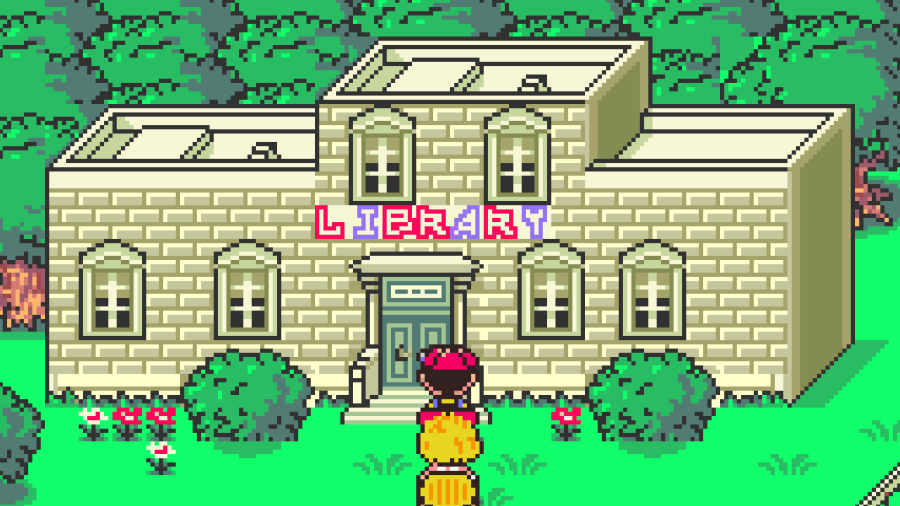
In the finale to my Bookwarm Games series on EarthBound, I looked at a couple of famous mottoes of the Enlightenment in Kant's essay. Sapere aude! but also, Caesar non est supra grammaticos. Which reminded me that I wanted to find something more succinct for this project than, To make learning synonymous with the pursuit of happiness. It just doesn't roll off the tongue the way a motto should.
Tove Jannson's Work and love might be a candidate. I don't know about Swedish, but that sounds good in Spanish: Trabajo y amor.
Then that made me think of the great Extremoduro lyric: Ama y ensancha el alma.
I worry a little about copyright with that one, though. So I'm open to more ideas.
Meantime, starting the next series on The Golden Compass shortly, I'll be looking for shiny bits of language to steal from Pullman. His Responsibility and delight has a nice classical ring to it.
Last but not least for now, the Calvin and Hobbes exultation comes to mind: There's Treasure Everywhere.

Tove Jannson's Work and love might be a candidate. I don't know about Swedish, but that sounds good in Spanish: Trabajo y amor.
Then that made me think of the great Extremoduro lyric: Ama y ensancha el alma.
I worry a little about copyright with that one, though. So I'm open to more ideas.
Meantime, starting the next series on The Golden Compass shortly, I'll be looking for shiny bits of language to steal from Pullman. His Responsibility and delight has a nice classical ring to it.
Last but not least for now, the Calvin and Hobbes exultation comes to mind: There's Treasure Everywhere.
Thursday, September 6, 2018
A Dog in a Bowling Alley: Concluding Unscientific Postscript
So much of learning is finding out how little you know. Famously, Socrates was said to have understood this better than anyone. And so for someone who tries to read the dialogues--Apology is a good one on this topic--it becomes difficult to tell what people really mean nowadays when they go around calling this or that style of teaching "Socratic." I have a hard time seeing it when most of what school seems to be about is along the lines of grades, tests, bells--appearances, in a word, rather than truth, or love of wisdom. I don't hesitate to say that what I try to do is Socratic teaching, of course, if I think it will help get people to listen to me, but I do wish we could investigate what that would actually look like, rather than treating it like any other school-reform buzzword. Particularly when we use it as nothing more than a token meant for translation into political terms, one that signals "high-brow, liberal arts, hence conservative," rather than "STEM, social justice-y, hence liberal," then "Socratic teaching" or "Socratic method" become essentially worthless for our purposes.
A similar concern, only more centered on such quaint-yet-revolutionary terms as "Christianity" and "faith," drives Kierkegaard in the Concluding Unscientific Postscript to Philosophical Fragments. The same pseudonym, Johannes Climacus, authors the Fragments and its long Postscript, both of which set forth the difficulty of calling someone or something Christian as if we all knew what we mean by that. While these books position themselves against the dominant philosophical current of Kierkegaard's day, which proclaimed it had superseded faith within Hegelian system-building, their message is totally relevant to our own, in which scientific triumphalism remains as easy a temptation to fall into as ever. Speaking approvingly of one who "stays out of jostling crowds," JC goes on:
Lately I've tried to read some popular apologists/political writers/philosophical/self-help gurus (Keller, Spitzer, Alinsky, Nafisi, Peterson, Beauvoir, Gilbert) besides my staple lately of non-specialist science, just to see what's out there, what's popular. I haven't read much of all there is, for sure, but I think it's safe to say that there's no one quite like Kierkegaard--and that he'll never be popular:
Tentatively, now, I would posit that no one before him, or perhaps since, has thought through the questions of eternal and existing, lived truth as deeply as SK. No one has ironically, in jest, and and in terrible earnest, spoken of crucifying reason on the cross of the paradox (564), unless I have been too careless to grasp it. No one has evoked more convincingly the forging of inward subjectivity in the struggle with the absolute dogma--not even Augustine or Shakespeare, though maybe I just need to read more of the former, starting with another pass at his Confessions, and revisit the latter's Lear, his Fool and Cordelia. And no one is as futile a popularizer as me, but I'll keep on trying to introduce SK to fellow readers, even if no one has the time to read him.
A similar concern, only more centered on such quaint-yet-revolutionary terms as "Christianity" and "faith," drives Kierkegaard in the Concluding Unscientific Postscript to Philosophical Fragments. The same pseudonym, Johannes Climacus, authors the Fragments and its long Postscript, both of which set forth the difficulty of calling someone or something Christian as if we all knew what we mean by that. While these books position themselves against the dominant philosophical current of Kierkegaard's day, which proclaimed it had superseded faith within Hegelian system-building, their message is totally relevant to our own, in which scientific triumphalism remains as easy a temptation to fall into as ever. Speaking approvingly of one who "stays out of jostling crowds," JC goes on:
Likewise, it is not suitable for a pamphlet writer to come lickety-split with his respectful supplication on behalf of a few dialectical deliberations. He would be just like a dog in a bowling alley. Likewise, it is not suitable for a stark-naked dialectician to enter into a scholarly dispute in which, despite all the talent and learning pro et contra, it is nevertheless, in the last resort, not dialectically decided what the dispute is about. If it is a purely philological controversy, then let learning and talent be honored with admiration, as they deserve to be, but then it has no bearing on faith. (27)I hope none of us here may be such lickety-split pamphlet writers; the image of a dog in a bowling alley is almost too pathetic to bear. If I rush in to praise Kierkegaard without knowing very well what to say about dialectics or faith, his two great themes, I hope I nevertheless do so decently attired. And we are far from taking a merely philological interest, I think, though I started this piece with a consideration of words. (I suspect that Signum University, a great proponent of reviving interest in philology in our time, itself acts at least partly from a concern with faith, if its founder's admiration of Boethius is any guide).
Lately I've tried to read some popular apologists/political writers/philosophical/self-help gurus (Keller, Spitzer, Alinsky, Nafisi, Peterson, Beauvoir, Gilbert) besides my staple lately of non-specialist science, just to see what's out there, what's popular. I haven't read much of all there is, for sure, but I think it's safe to say that there's no one quite like Kierkegaard--and that he'll never be popular:
To explain the paradox would then be to comprehend ever more deeply what a paradox is and that the paradox is the paradox.
Thus God is a supreme conception that cannot be explained by anything else but is explainable only by immersing oneself in the conception itself. The highest principles for all thinking can be demonstrated only indirectly (negatively). Suppose that the paradox is the boundary for an existing person's relation to an eternal, essential truth--in that case the paradox will not be explainable by anything else if the explanation is supposed to be for existing persons. (220)In a footnote discussing the review of Fragments in a German journal, Kierkegaard/JC expresses his pleasant surprise at anyone reading it at all, but then takes issue with the "didactic" delivery:
As I see it, this is the most mistaken impression one can have of it. The contrast of form, the teasing resistance of the imaginary construction to the content, the inventive audacity (which even invents Christianity), the only attempt made to go further (that is, further than the so-called speculative constructing), the indefatigable activity of irony, the parody of speculative though in the entire plan, the satire in making efforts as if something [altogether extraordinary, that is, new] were to come of them, whereas what always emerges is old-fashioned orthodoxy in its rightful severity--of all this the reader finds no hint in the report. And yet the book is so far from being written for nonknowers, to give them something to know, that the person I engage in conversation in this book is always knowledgeable, which seems to indicate that the book is written for people in the know, whose trouble is that they know too much. Because everyone knows the Christian truth, it has gradually become such a triviality that a primitive impression of it is acquired only with difficulty. When this is the case, the art of being able to communicate eventually becomes the art of being able to take away or to trick something away from someone. This seems strange and very ironic, and yet I believe I have succeeded in expressing exactly what I mean. When a man has his filled his mouth so full of food that for this reason he cannot eat and it must end with his dying of hunger, does giving food to him consist in stuffing his mouth even more or, instead, in taking a little away so that he can eat? Similarly, when a man is very knowledgeable but his knowledge is meaningless or virtually meaningless to him, does sensible communication consist in giving him more to know, even if he loudly proclaims that this is what he needs, or does it consist, instead, in taking something away from him? When a communicator takes a portion of the copious knowledge that the very knowledgeable man knows and communicates it to him in a form that makes it strange to him, the communicator is, as it were, taking away his knowledge, at least until the knower manages to assimilate the knowledge by overcoming the resistance of the form. (275)There is no small irony that in the next few pages he ventures to criticize Socrates' tendency to give long speeches at times, when the master of ironic questioning worried there might be some misunderstanding. For the pages-long footnote, nay, the whole long book, is just such an urbane voice of one crying in the wilderness. And at the very end, Kierkegaard does finally let the ironic distance collapse into unmistakably direct communication, confessing that all of the authors of his books have been authored by him. I'm still missing a couple of them, Concept of Anxiety and Prefaces, as well as his student thesis on Socratic irony, but apparently all these works were supposed to be in fact concluded by Postscript. Instead, though, he went on writing more. So we'll read on!
Tentatively, now, I would posit that no one before him, or perhaps since, has thought through the questions of eternal and existing, lived truth as deeply as SK. No one has ironically, in jest, and and in terrible earnest, spoken of crucifying reason on the cross of the paradox (564), unless I have been too careless to grasp it. No one has evoked more convincingly the forging of inward subjectivity in the struggle with the absolute dogma--not even Augustine or Shakespeare, though maybe I just need to read more of the former, starting with another pass at his Confessions, and revisit the latter's Lear, his Fool and Cordelia. And no one is as futile a popularizer as me, but I'll keep on trying to introduce SK to fellow readers, even if no one has the time to read him.
Tuesday, August 28, 2018
The Register of Coco
One of the last things she left for me to teach last year, when I was subbing for a Spanish teacher up the hill, was the Disney movie Coco. It was for after the intermediate classes had taken their exams, so even more than usual it was really just a way to pass the time, and yet I can think of no better way to spend class time than this: looking at a great work and talking about it, using as much as possible the language it gives us, so as to learn it for ourselves. At least for a few days at the end of the school year, this is what we did. Anyhow, I did my best to make it interesting for them, and I got some positive feedback from the students.
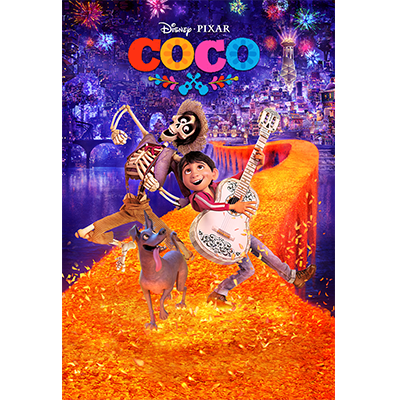
Here's a few things I found. We are never too old to watch Disney movies. Maybe an obvious point, but it bears setting out up front. I think this corollary is also true: we're never too young to read great books. A firsthand encounter with great works is the main thing. I lay this down as a basic presupposition. To deny it suggests to me an atrocious hubris on the part of the teacher or rather the administrators pushing their own well-meaning but ruinous, barren curriculum. If students spend time reading or watching something great in class, that is time well spent.
Just watching a movie is frowned upon these days, though. When I was a kid it was the go-to activity whenever we had a sub, but I was cautioned that we had to have something else going on, to justify it as learning. Thus, I used this article, Las claves de Coco para entender la cultura Mexicana, as a point of departure for further study of the movie, from a site called, evocatively, Hipertextual. So there's a handy thing to know: along with the great work, we can provide an example of a response to it, so students have an idea of what we're doing in our discussion. Ideally, they'll learn by doing it, but it seems to reassure them, and any administrators walking by, to have more of a concrete example--particularly if we're going to put something in writing. Of course the teacher's role in reading, speaking, listening, and writing is also a crucial example. So I made much of being interested in watching the movie and reading this article about it, and exuded still more interest in hearing what the students themselves thought. This only works if the teacher really is interested, of course, so that's yet another reason to just spend time on great stuff.
After we completed the movie, then, we read that article out loud as a class, so kids got to practice their pronunciation and fluency and learn lots of new words in context. They got to ask questions, and I got to amplify the examples touched upon by the article: Did you notice the name Dante? Do you know who Dante was? What strikes you about the painting? Have any of you seen Kahlo's work before? In person, at a museum? Have you ridden the cable car above the falls in Riverfront Park? and so on. This illustrates some of what we mean by greatness: that the work, on the one hand, fits into a universe of other great works--the paintings of Kahlo and Rivera, the architecture of ancient and modern Mexico, with its religious and cultural syncretism, the poetry of the underworld and the much-bandied-about hero's journey; and, on the other hand, it stands on its own, as we do in approaching it, providing something integral in itself and new to us: the experience of wonder and awe when the truth is revealed, which lights up the eye of the beholder, maybe with welling tears. The main take-away is this experience. Just to elaborate a bit, though, we might reflect on how this experience carries with it the sense that it is simultaneously uniquely ours and shared with everyone else who encounters the work, and that we all gain by attempting to communicate honestly (where two or three gather...); that other people, starting with the teacher and my classmates, care what I think, that what I think matters not just because I believe it (though in a sense, that must be so), but because it represents my earnest attempt to enter into this universe of great works, not only of art and poetry but also science, technology, politics and every other human endeavor, and nothing could demonstrate more responsibility, or be worthy of more respect, than this.
To provide something a little less abstract--though I stress again, there is nothing more concretely real than that experience and our developing reflections upon it, and without it there's no point in any amount of professional-sounding blather about so-called Socratic teaching or hero's journeys, etc--we have to look at the songs. The music and lyrics, even more than the visuals or other references, were the essential elements I was most interested in delving into from the movie. And here I'd remark that it's important not to take ourselves too seriously. Part of this sincere attempt at understanding, in the case of Coco, is serious play, playing with words, digging into their meanings well beyond the surface. I don't actually know much about music or movies, or education, for that matter--I'm only a substitute, after all--but I know that it's where my interest drew me, and so I pursued the questions with the class.
It's a little funny to take the time to look seriously at the individual words used in the songs in Coco, but the difference that doing so can make for the audience is by no means trivial. So to give an example: in Spanish class one of the first things students learn is that there is an informal and a formal mode of address: tu and usted, or vosotros and ustedes in the plural. Dealing with the concept of grammar as such, and especially putting together subjects with their verb conjugations, is most of what students trudge through for their first couple of years of Spanish class, so I wanted to show them why this actually matters. At some point they start to get into the subjunctive mood, another thing we don't really deal with anymore in English, but which is very significant in the Spanish lyrics of the songs. This is what I mainly mean by talking about the register of the songs: how are the formal and informal pronouns and the indicative and subjunctive verbs used? What can we take from that about the meaning? These are difficult questions, but extremely rewarding to explore. So I lead up to them gradually, listening to and singing along with them the songs over and over, pointing out patterns in the lyrics, getting students to articulate their understanding of the grammar and to see it used in context.
For anyone interested in trying this, looking at the lyrics' use of subjunctive (particularly in Llorona, traditional), and informal and formal register (between Recuerdame and Latido de mi corazon, composed for the movie) made for an excellent grammar review and deepened our understanding of these marvelous songs. I highly recommend it, and would be glad to talk more in detail about my analysis and about lesson planning if you'd like. To extend the activity, students can compare and contrast the Spanish with the English translations, or even try translating a few lines or stanzas.
For a send-off, though it's not in the movie, we sang karaoke to the classic Cielito Lindo and went smiling into the summer which is now, sure enough, ending.
Ay, ay, ay, ay
Canta y no llores...
Here's a few things I found. We are never too old to watch Disney movies. Maybe an obvious point, but it bears setting out up front. I think this corollary is also true: we're never too young to read great books. A firsthand encounter with great works is the main thing. I lay this down as a basic presupposition. To deny it suggests to me an atrocious hubris on the part of the teacher or rather the administrators pushing their own well-meaning but ruinous, barren curriculum. If students spend time reading or watching something great in class, that is time well spent.
Just watching a movie is frowned upon these days, though. When I was a kid it was the go-to activity whenever we had a sub, but I was cautioned that we had to have something else going on, to justify it as learning. Thus, I used this article, Las claves de Coco para entender la cultura Mexicana, as a point of departure for further study of the movie, from a site called, evocatively, Hipertextual. So there's a handy thing to know: along with the great work, we can provide an example of a response to it, so students have an idea of what we're doing in our discussion. Ideally, they'll learn by doing it, but it seems to reassure them, and any administrators walking by, to have more of a concrete example--particularly if we're going to put something in writing. Of course the teacher's role in reading, speaking, listening, and writing is also a crucial example. So I made much of being interested in watching the movie and reading this article about it, and exuded still more interest in hearing what the students themselves thought. This only works if the teacher really is interested, of course, so that's yet another reason to just spend time on great stuff.
After we completed the movie, then, we read that article out loud as a class, so kids got to practice their pronunciation and fluency and learn lots of new words in context. They got to ask questions, and I got to amplify the examples touched upon by the article: Did you notice the name Dante? Do you know who Dante was? What strikes you about the painting? Have any of you seen Kahlo's work before? In person, at a museum? Have you ridden the cable car above the falls in Riverfront Park? and so on. This illustrates some of what we mean by greatness: that the work, on the one hand, fits into a universe of other great works--the paintings of Kahlo and Rivera, the architecture of ancient and modern Mexico, with its religious and cultural syncretism, the poetry of the underworld and the much-bandied-about hero's journey; and, on the other hand, it stands on its own, as we do in approaching it, providing something integral in itself and new to us: the experience of wonder and awe when the truth is revealed, which lights up the eye of the beholder, maybe with welling tears. The main take-away is this experience. Just to elaborate a bit, though, we might reflect on how this experience carries with it the sense that it is simultaneously uniquely ours and shared with everyone else who encounters the work, and that we all gain by attempting to communicate honestly (where two or three gather...); that other people, starting with the teacher and my classmates, care what I think, that what I think matters not just because I believe it (though in a sense, that must be so), but because it represents my earnest attempt to enter into this universe of great works, not only of art and poetry but also science, technology, politics and every other human endeavor, and nothing could demonstrate more responsibility, or be worthy of more respect, than this.
To provide something a little less abstract--though I stress again, there is nothing more concretely real than that experience and our developing reflections upon it, and without it there's no point in any amount of professional-sounding blather about so-called Socratic teaching or hero's journeys, etc--we have to look at the songs. The music and lyrics, even more than the visuals or other references, were the essential elements I was most interested in delving into from the movie. And here I'd remark that it's important not to take ourselves too seriously. Part of this sincere attempt at understanding, in the case of Coco, is serious play, playing with words, digging into their meanings well beyond the surface. I don't actually know much about music or movies, or education, for that matter--I'm only a substitute, after all--but I know that it's where my interest drew me, and so I pursued the questions with the class.
It's a little funny to take the time to look seriously at the individual words used in the songs in Coco, but the difference that doing so can make for the audience is by no means trivial. So to give an example: in Spanish class one of the first things students learn is that there is an informal and a formal mode of address: tu and usted, or vosotros and ustedes in the plural. Dealing with the concept of grammar as such, and especially putting together subjects with their verb conjugations, is most of what students trudge through for their first couple of years of Spanish class, so I wanted to show them why this actually matters. At some point they start to get into the subjunctive mood, another thing we don't really deal with anymore in English, but which is very significant in the Spanish lyrics of the songs. This is what I mainly mean by talking about the register of the songs: how are the formal and informal pronouns and the indicative and subjunctive verbs used? What can we take from that about the meaning? These are difficult questions, but extremely rewarding to explore. So I lead up to them gradually, listening to and singing along with them the songs over and over, pointing out patterns in the lyrics, getting students to articulate their understanding of the grammar and to see it used in context.
For anyone interested in trying this, looking at the lyrics' use of subjunctive (particularly in Llorona, traditional), and informal and formal register (between Recuerdame and Latido de mi corazon, composed for the movie) made for an excellent grammar review and deepened our understanding of these marvelous songs. I highly recommend it, and would be glad to talk more in detail about my analysis and about lesson planning if you'd like. To extend the activity, students can compare and contrast the Spanish with the English translations, or even try translating a few lines or stanzas.
For a send-off, though it's not in the movie, we sang karaoke to the classic Cielito Lindo and went smiling into the summer which is now, sure enough, ending.
Ay, ay, ay, ay
Canta y no llores...
Thursday, August 16, 2018
Three Fun Facts Stemming from Frye's Four Essays
Anatomy of Criticism: Four Essays by Northrup Frye is another one of these books I've had like a Sword of Damocles hanging over me for years, nodding to the lives I haven't lived. Finally coming to read it, I find it's incredibly germane to the project I'm engaged in right now of exploring the poetic potential brought to light in scientific and technological progress--particularly in the rhetoric surrounding this progress as practiced by its champions and popularizers, as well as by its detractors and demonizers.
Frye beautifully sums up the whole field of literary criticism, from Aristotle to the present. For since 1957, when Anatomy came out, the post-structural vogue for obfuscation and the plurality of -isms which have followed in its train seem to be the only new developments, with the exception of a revitalization of philology springing from Tolkien's vast shadow.
With metaphors of music and seasons, the descriptive play of the reader's impressions of all manner of verbal content is brought into a series of illuminating formal patterns, spiraling around axes of innocence and experience, tragedy and comedy, romance and irony, high and low mimesis, pity and fear, community and individuality, shading on the one hand into direct address, on the other into incommunicable epiphany and apocalypse. Here, if we can understand it, is the structure from which the post-structuralists went post-al.
Practically every page, starting with the dedication, sent me to search up references I didn't know, to pause and sigh over connections I had never made, to marvel at intuitions and jokes I could hardly parse. Speaking of the pastoral Lycidas, Frye quips:
And now, without further ado, three fun facts about Frye and I:
1. Neither of us hold PhDs (though he ended up receiving many honorary doctorates).
2. Neither of us drive.
3. Our given names, Northrup and Wesley, both start with what sound like cardinal directions.
Frye beautifully sums up the whole field of literary criticism, from Aristotle to the present. For since 1957, when Anatomy came out, the post-structural vogue for obfuscation and the plurality of -isms which have followed in its train seem to be the only new developments, with the exception of a revitalization of philology springing from Tolkien's vast shadow.
With metaphors of music and seasons, the descriptive play of the reader's impressions of all manner of verbal content is brought into a series of illuminating formal patterns, spiraling around axes of innocence and experience, tragedy and comedy, romance and irony, high and low mimesis, pity and fear, community and individuality, shading on the one hand into direct address, on the other into incommunicable epiphany and apocalypse. Here, if we can understand it, is the structure from which the post-structuralists went post-al.
Practically every page, starting with the dedication, sent me to search up references I didn't know, to pause and sigh over connections I had never made, to marvel at intuitions and jokes I could hardly parse. Speaking of the pastoral Lycidas, Frye quips:
In short, we can get a whole liberal education simply by picking up one conventional poem and following its archetypes as they stretch out into the rest of literature. (100)The erudition and endless reading that went into this synthesis appall me, when I compare them with my own education. And yet the message of the book is ultimately encouraging:
What does improve in the arts is the comprehension of them, and the refining of society which results from it. It is the consumer, not the producer, who benefits by culture, the consumer who becomes humanized and liberally educated. There is no reason why a great poet should be a wise and good man, or even a tolerable human being, but there is every reason why his reader should be improved in his humanity as a result of reading him. (344)This opens up, of course, the broadest possible meaning of poet as one who produces imaginatively, including scientists, artists, musicians, and, occupying a still more privileged place in Frye's conception, mathematicians. The fascinating analogy between literature and mathematics cuts through the grandiosity of socio-cultural proselytizing the critic seems glad to dispose of here, brings the book to its close, and presumably picks up in his later work The Great Code, which I'm eager to look forward to reading awhile, too.
And now, without further ado, three fun facts about Frye and I:
1. Neither of us hold PhDs (though he ended up receiving many honorary doctorates).
2. Neither of us drive.
3. Our given names, Northrup and Wesley, both start with what sound like cardinal directions.
Saturday, August 11, 2018
Theater and Politics, from Solon to Bulgakov

The cynosure of Versailles, Louis represents the tendency of whatever is interesting in politics and theater to coalesce in one place, one person. We've tried separating church and state, but we still read the news because it's interesting, though part of what is interesting about it is that it might be true. We still believe in things enough to give them our attention, or seek distraction in them from the things we can't help but believe. And we still revere kings, just in another sphere: entertainment--

(Google images for "King of Pop" or "King James," "The Crown," etc.)
Since around the spring, I've been reading more of the news, mostly just The Atlantic and whatever they link to. Still, I prefer books to the news, and say so to anyone who will listen.
Lately, listening to books rather than podcasts while going about the household chores, I'm trying to catch up on The Master and Margarita, the Table and Chairs seminar's summer reading, and so I include a passage from it on the other end of the Plutarch I've been thinking about in this connection:
Thespis was now beginning to develop tragedy, and the attempt attracted most people because of its novelty, although it was not yet made a matter of competitive contest. Solon, therefore, who was naturally fond of hearing and learning anything new, and who in his old age more than ever before indulged himself in leisurely amusement, yes, and in wine and song, went to see Thespis act in his own play, as the custom of the ancient poets was. After the spectacle, he accosted Thespis, and asked him if he was not ashamed to tell such lies in the presence of so many people. Thespis answered that there was no harm in talking and acting that way in play, whereupon Solon smote the ground sharply with his staff and said: "Soon, however, if we give play of this sort much praise and honour, we shall find it in our solemn contracts."As long ago as that, we recognized the danger of conflating politics and entertainment; the very next paragraph, with Pisistratus' self-wounding for attention and bodyguards, shows the utility of the same. But the main thing seems to be that it's interesting. Here's Bulgakov:
'But this is the question that disturbs me--if there is no God, then who, one wonders, rules the life of man and keeps the world in order?'
'Man rules himself,' said Bezdomny angrily in answer to such an obviously absurd question.
'I beg your pardon,' retorted the stranger quietly, 'but to rule one must have a precise plan worked out for some reasonable period ahead. Allow me to enquire how man can control his own affairs when he is not only incapable of compiling a plan for some laughably short term, such as, say, a thousand years, but cannot even predict what will happen to him tomorrow?'What happens to Bezdomny in just a few pages, of course, is that he slips on the spilled sunflower oil and gets decapitated by the streetcar.
The alternatives to political theater for our attention, whether religious, philosophical, poetic, scientific, all play themselves out within the limitations of our bodies and the aspirations of our minds. If we're able to transcend politics and the news media in their latest manifestations, it will be as much by telling a more interesting story about the drama of human activity as it will be by projecting long-term goals and reforming decrepit institutions.
Subscribe to:
Posts (Atom)