Friday, February 14, 2020

Gamecool Books: The Amber Spyglass

The Gamecool Books podcast turns to The Amber Spyglass, the concluding volume in His Dark Materials, by Philip Pullman. Long-form discussions of the intertextual goodness branching out from the book in all directions, and of the depiction of consciousness at its heart, will be posted on a weekly-or-so basis, along with conversations with other fans and scholars. This page will also be updated with recommended additional reading to accompany our deep dive into Pullman's work. I welcome any questions or comments. Enjoy!

Ep 56: A Novel Answer
Ch 1 The Enchanted Sleeper
Ch 2 Balthamos and Baruch
"The Man Who Walked with God: Philip Pullman's Metatron, the Biblical Enoch, and the Apocrypha," John Haydn Baker. In Critical Perspectives on Philip Pullman’s His Dark Materials, Barfield and Cox ed.


Ch 3 Scavengers
Ch 4 Ama and the Bats
Coleridge, "The Knight's Tomb"
Dickinson, "She lay as if at play"

Ep 58: Conversation with Leanna on BBC/HBO His Dark Materials
Ch 5 The Adamant Tower
Ch 6 Preemptive Absolution
Ch 7 Mary, Alone
from Milton, Paradise Lost bk. I, III, VII
I Ching, Wilhelm trans. and commentary


Ch 8 Vodka


Ch 10 Wheels


Ch 12 The Break
Ch 13 Tialys and Salmakia
Spenser, Faerie Queene I.9 
Blake, The Little Girl Lost

Ch 14 Know What It Is
Ch 15 The Forge


Ch 16 The Intention Craft
Ch 17 Oil and Lacquer


Ch 18 The Suburbs of the Dead
Ch 19 Lyra and Her Death


Ch 20 Climbing
Ch 21 The Harpies
Dickinson, I gained it so 
Byron, Venice letter to John Murray Apr 2, 1817


Ch 22 The Whisperers
Ch 23 No Way Out
Milton, Paradise Lost bk. I


Millicent Lenz - Philip Pullman [essay/chapter in Alternative Worlds in Fantasy Fiction]
As Lyra and Roger read of the scholars in the crypt at Jordan: requiescant in pace

Ch 24 Mrs Coulter in Geneva
Ch 25 Saint-Jean-Les-Eaux
Ezekiel 16 


Ch 34 There Is Now
Ch 35 Over the Hills and Far Away
"Over the Hills and Far Away," trad. (Or is it Led Zeppelin's?)
God and Dust: Notes for a Study Day with the Bishop of Oxford, in Daemon Voices

Ch 36 The Broken Arrow
Ch 37 The Dunes


Ch 38 The Botanic Garden
Pullman's Acknowledgments


Wednesday, October 9, 2019

Reckless Abandon

Along with my friend Ben, I'm going to be launching a new site soon, devoted to video games and scholarship. We're calling it, appropriately enough, Video Game Academy.

There's a number of projects we're working on there, from game reviews and analysis to promoting the academic study of games and contributing to the diffusion of existing scholarship, so I hope you'll check it out.

This isn't to say I won't keep on with the occasional posts here re-imagining public education, or updating my long-term readings of Pullman or Xenogears, but I'm going to try to focus on the new site for a bit to get it established. 

We're starting out with a short course on Little Inferno, a brilliant mobile game, and a then digging into the classic Final Fantasy VI (initially released as FFIII in the US), one I never actually finished playing all the way through. See the new site for more info, and let us know if you want to get involved!

Tuesday, September 17, 2019

Pullman podcasts

A much more professional podcast featuring Pullman himself is up on Backlisted.

The topic is not his own work, but Burton's Anatomy of Melancholy. There's all sorts of shiny bits of story there worth stealing, though. Probably the best podcast about books and reading I've come across.

Another one, making tea for Adam Buxton

Some great new insights and reprises of favorite themes in Pullman's work.

In a few weeks, we're planning a Signum Symposia event to coincide with the release of Pullman's new book, The Secret Commonwealth. Here it is!


Wednesday, August 7, 2019

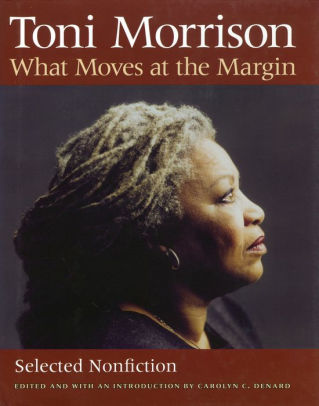
Toni Morrison and the Living Language

It's tough to keep track of the news, for lots of reasons; however, the passing of Toni Morrison bears noting here, among all the others' passing that we pass over in silence.

Her Nobel Prize Lecture, her banquet speech, her books and essays, all bear reading and re-reading--words the quality of which most of us could only dream of leaving behind.


For her a dead language is not only one no longer spoken or written, it is unyielding language content to admire its own paralysis. Like statist language, censored and censoring. Ruthless in its policing duties, it has no desire or purpose other than maintaining the free range of its own narcotic narcissism, its own exclusivity and dominance. However moribund, it is not without effect for it actively thwarts the intellect, stalls conscience, suppresses human potential. Unreceptive to interrogation, it cannot form or tolerate new ideas, shape other thoughts, tell another story, fill baffling silences. Official language smitheryed to sanction ignorance and preserve privilege is a suit of armor polished to shocking glitter, a husk from which the knight departed long ago. Yet there it is: dumb, predatory, sentimental. Exciting reverence in schoolchildren, providing shelter for despots, summoning false memories of stability, harmony among the public.
She is convinced that when language dies, out of carelessness, disuse, indifference and absence of esteem, or killed by fiat, not only she herself, but all users and makers are accountable for its demise. In her country children have bitten their tongues off and use bullets instead to iterate the voice of speechlessness, of disabled and disabling language, of language adults have abandoned altogether as a device for grappling with meaning, providing guidance, or expressing love. But she knows tongue-suicide is not only the choice of children. It is common among the infantile heads of state and power merchants whose evacuated language leaves them with no access to what is left of their human instincts for they speak only to those who obey, or in order to force obedience.

And her language goes on, wave after wave of this incredible wisdom, until the dialogue of the listening children picks back up:

“Tell us what it is to be a woman so that we may know what it is to be a man. What moves at the margin. What it is to have no home in this place. To be set adrift from the one you knew. What it is to live at the edge of towns that cannot bear your company.
“Tell us about ships turned away from shorelines at Easter, placenta in a field. Tell us about a wagonload of slaves, how they sang so softly their breath was indistinguishable from the falling snow."

What Moves at the Margin: Selected Nonfiction

It's astonishing to think that I was growing up in a world where there was still a writer of this imaginative stature, this noble mien. Her novel Beloved is one of the first of the books I was assigned to read in school that really made me take notice of how far beyond the school these books might reach, how much more school could be. I've been writing about that in one way or another, inspired by that and similar moments, for a decade now, and still haven't quite recovered from the shock of those initial impressions.

Her essay Playing in the Dark, like much of the language in her Nobel speech, bears powerfully upon the discourse of video games and fantasy literature which I've been studying, and if I can get my act together I'll try to bring out some of these connections soon, and over the next few years.

Monday, August 5, 2019

Plato in the Summer, and Klein's Commentary

Having read or re-read most of Plato for a summer reading project, I also wanted to make some time to revisit Jacob Klein's Commentary on Meno. The writing of commentaries is something I've been very into lately, though mine are all about old video games and fantasy series, so it is gratifying to read one so masterful about so complex a subject. It's really the next best thing to discussing the book with someone else, which of course is in a sense the entire point of Plato's project. Klein makes this point in various ways, but also glosses many words and passages in Greek, engages with other scholars and translators, and draws connections to key arguments about knowledge and recollection which are widely scattered throughout Plato's dialogues, all of which is even more invaluable than your ordinary seminar, and well worth the difficulty of reading and re-reading.

Barfield and Tolkien, words and biographies

Though much lesser known than Tolkien, the importance of Owen Barfield's writing is powerfully attested to by Verlyn Flieger in her Splintered Light: Logos and Language in Tolkien's World. 

My review of a Mark Vernon's new book about Barfield, A Secret History of Christianity, is on A Pilgrim in Narnia. But I've been doing some background reading while I was working on that...

A number of people recommended that the place to start reading Barfield is with his History in English Words, so I duly read it after his Saving the Appearances, Poetic Diction, and lots of the essays available on the website dedicated to his work. History is a little more accessible--still forbiddingly erudite and fruitily British, a combination which won't be for everyone, but there is a wealth of interesting connections to marvel at if you can get into it. The foreword by Auden, which speaks of a "battle between civilization and barbarism," and the footnotes about the use of the term Aryan are still a little off-putting, and by the end of the book, I wasn't quite clear about what the ramifications of the study of philology were supposed to be. Is it for the benefit of the individual or the society to think a little harder about the language? I wasn't sure what I was being asked to do with all this, aside from taking Barfield up on his suggestions for further reading (OED, Max Muller, Pearsall Smith, Bradley, Weekly, Skeat).

As far as Tolkien scholarship, two of the most well-regarded books to come out in recent years are Tolkien and the Great War, by John Garth, and Tolkien, Race, and Cultural History, by Dimitra Fimi. The one is a biography, the other a survey of fairy-elements, and so while there is some overlap, they're really complementary, and well deserve their de facto status as required reading. Both highlight some of the lesser-known sources of Tolkien's inspiration: Chesterton, MacDonald, and Peter Pan, but also William Morris, whose romances were widely read at the front, and Francis Thomspon, about whom Tolkien said revealingly in an early essay:

one must begin with the elfin and delicate and progress to the profound: listen first to the violin and the flute, and then learn to hearken to the organ of being's harmony.

Both approach the topic of racial overtones with much more circumspection than Barfield. Fimi gives more attention to Tolkien's languages, though Garth does deal with them illustratively enough without digging in quite as much--in each, the integral role they play in Tolkien's thought comes through, and so it's clear how Barfield's musings would have been of significance to him. Still more with respect to Tolkien's own beliefs about what he was up to: recovering a lost truth through his stories. In Garth, copious research is brought forth to trace the role of WWI and his friendships with the members of the TCBS in developing Tolkien's philosophy, whereas Carpenter's earlier biographies understandably focused on the Inklings; in Fimi, a balanced background of myth, popular culture, linguistics, and sociology is fused in a compelling context for Tolkien's activity. Stirring stuff for the aspiring or amateur scholar, to be sure.

Monday, July 8, 2019

Gopnik on play, education, and reading

Alison Gopnik's The Carpenter and the Gardener (reviewed here) offers a number of insights on play and reading which would be worth a closer look.

Starting with ch 6, The Work of Play:

The passage in Dickens' Great Expectations where Miss Havisham bids Pip play sets up what Gopnik identifies as one of many paradoxes: "by definition, play is what you do when you're not trying to do anything. It's an activity whose goal is not to have a goal..."

Another follows on its heels: "There is also something scientifically paradoxical about play. The idea that play is good for learning has an intuitive appeal. But if play really makes you smarter, more focused, or better at understanding other  people, why not just aim to be smarter or more focused or more empathic directly? Why go through the elaborate detour of play?" (149)

She lays out five characteristics from "Biologists who try to define play"--not work, fun, voluntary, depends on other basic needs being satisfied, a pattern of repetition and variation--then looks at a series of case studies more closely.

Her citations here:
Burghardt 2005; Panksepp and Burgdorft 2000; Smith and Hagan 1980; Pellegrini and Smith 1998; Pellis and Pellis 2007 and 2013; Himmler, Pellis, and Kolb 2013; Diamond 1988; Wood 2013; Berlin 1953; Macdonald 1987; Holzhaider,  Hunt, and Gray 2010; Perkins 1961; Cook, Goodman, and Sculz 2011; Bonawitz et al. 2012; Stahl and Feigenson 2015; Harris 2000; Gaskins 1999; Haight et al. 1999; Arie 2004; Gopnik 2012; Weisberg and Gopnik 2013; Buchsbaum et al 2012; Baron-Cohen 1997; Wellman 2014; Taylor 1999; Taylor and Carlson 1997; Mar et al. 2006; Mar and Oatley 2008; Kidd and Castano 2013; Bongard, Zykov, and Lipson 2006; Bonawitz et al 2011; Buchsbaum et al. 2011; Fisher et al. 2013; Weisberg, Hirsh-Pasek, and Golinkoff 2013.

(Conspicuous by their absence are Piaget and Huizinga, but well, the moral-religious and cultural elements of play are not her main interest here.)

A decent summary comes in toward the end of the chapter: "So rough-and-tumble play seems to help animals and children to interact with others. Exploratory play helps animals and children learn how things work. And pretend play helps children think about possibilities and understand other people's minds" (170).

"Play lets children randomly and variably try out a range of actions and ideas [explore, in engineering terms], and then work out the consequences [leading to the exploit phase characteristic of adult, focused attention]" (172).

Gopnik concludes, "The gift of play is the way it teaches us how to deal with the unexpected," which provides the evolutionary answer for why it's fun to play, by an analogy to the pleasure of sex: "we don't play because we think that eventually it will give us robust cognitive functions--although that may be the evolutionary motivation for play. We play because it is just so much fun" (172-3).

A final insight for intentional 'gamification' of education: "children played with the toy longer, tired more different actions, and discovered more of the 'hidden' features when the experimenter squeaked the beeper accidentally than they did when she deliberately tried to teach them" (174).


Turning to the applications of her research for schools in the next chapter, Growing Up:

"There is a parallel between the contemporary dilemmas of parenting [a verb Gopnik takes issue with in the first place] and the equally ferocious dilemmas of schooling. Like parents, educators often have a scientifically inaccurate picture of learning and development...that education is supposed to shape a child into a particular kind of adult... from a scientific perspective, learning isn't about test scores at all--it's about tracking the reality of the world around you." (179-180). I'd argue, of course, that it's primarily a philosophical issue, deeper than the scientific line Gopnik hews to here, but I think that's a minor quibble given her evidently deep and broad liberal education behind her approach to the scientific literature.

Her citations:
Smith, Carey, and Wiser 1985; Hatano and Inagaki 1994; Inagaki and Hatano 2006; Ross et al. 2003; Capelli, Nakagawa, and Madden 1990; Lagattuta et al 2015; Rogoff 1990; Dye, Green, Bavelier 2009; Zelazo, Carlson, Kesek 2008; Casey et al 2005; Markham and Greenough 04; Ungerleider, Doyon, kami 02; Paradise and Rogoff 09; Lave and Wegner 91; Reps and Senzaki 98; Bransford, Brown, Cocking 99; Gardner 2011; Snowling 2000; Halberda, Mazzocco, Feigenson 2008; Senechal and LeFevre 2002; Posner and Rothbart 07; Gopnik 09; Kidd, Piantadosi, Aslin 2012; Carhart-Harris et al. 2012, 14; Hinshaw and Scheffler 14; Molina et al. 09; DeVries 98; Taylor et al. 15; Opie and Opie 2000; Steinberg 14; Dahl 04; Steinberg 04; Casey, Jones, and Hare 08; Gardner and Steinberg 05; Flynn 87, 07; Pietschnig and Voracek 15; Shaw et al 06; Berlin 13.

(Notably absent here is the doyen of the moment for Spokane Schools ed research, Marzano)

She advocates for apprenticeship, project-based learning, assessment via observation rather than test-taking, play, service opportunities, travel, and safe sex.

On reading as a technology in the next chapter, she cites further: Dehaene 09, Wood 08, MacLeod 91, Olson 96, Ong 88, and, delightfully, Socrates in the Phaedrus.

So, on to Dickens and Plato, for a start!